Allegemeiner Konsum e. V. Braunschweig 2025
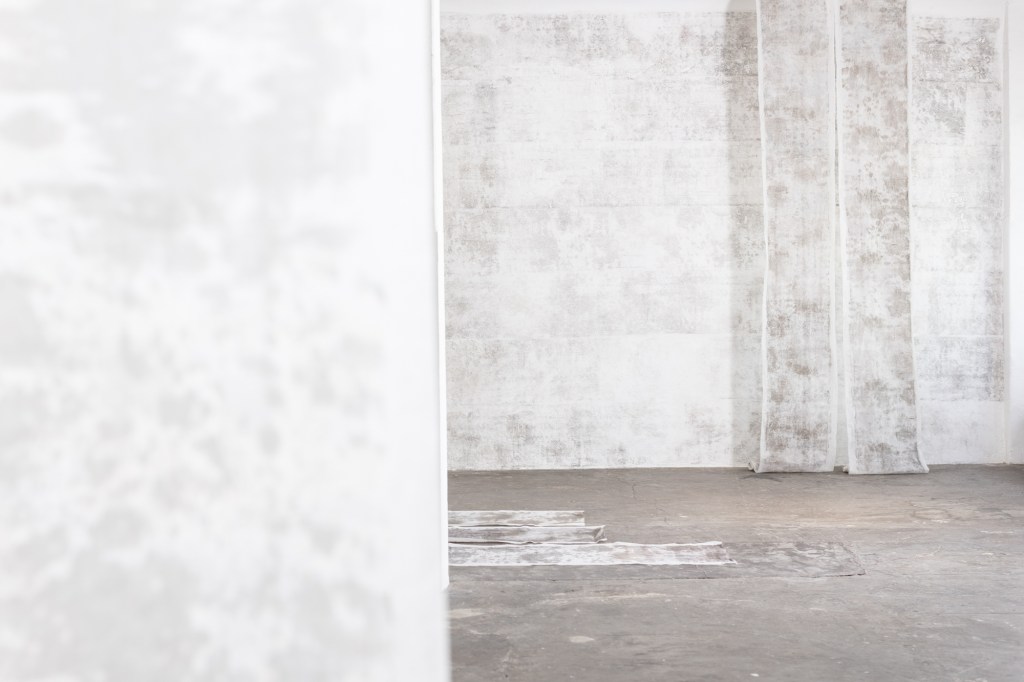
Foto: Hannah Jung, © Allgemeiner Konsumverein, 2025.
DE:
Ein Ort: Geschichte und Ornament
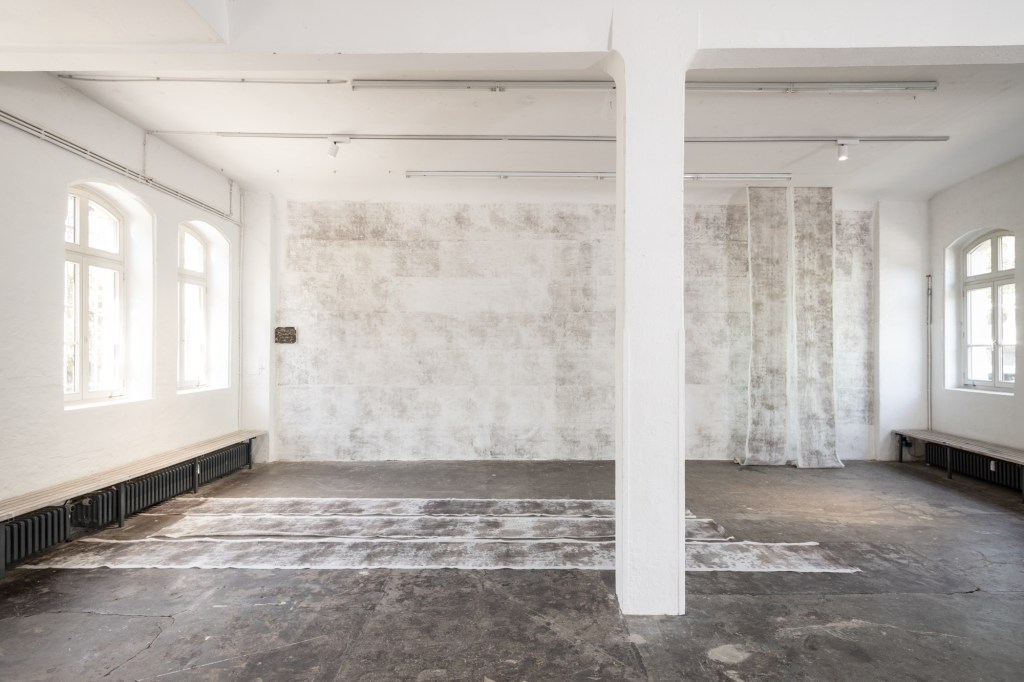
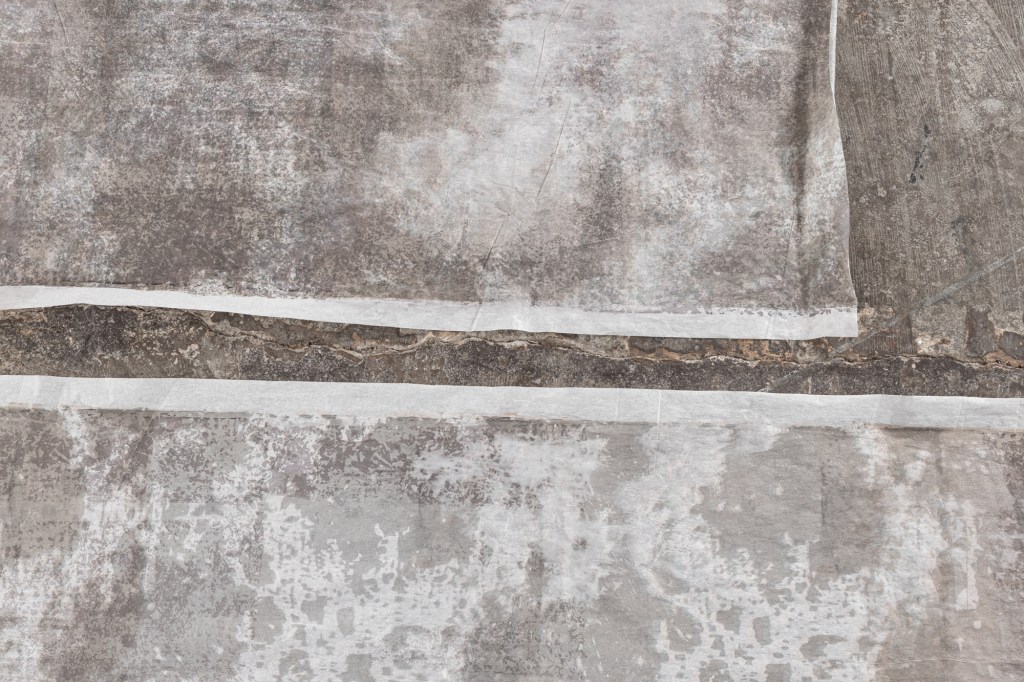
Das Projekt basiert auf einer konkreten, fast archäologischen Analyse des Ortes – nicht um seine Geschichte zu rekonstruieren, sondern um daraus Formen, Flächen und sichtbare Rückstände abzuleiten. Ausgangspunkt waren die Abdrücke am Boden des Ausstellungsraums, die ich durch Zeichnung, Malerei, Frottage und Fotografie aufnahm und anschließend im Siebdruck auf eine lange Rolle aus industriellem Teepapier, dünn und fast durchscheinend, übertrug. Im Wechsel zwischen Atelier und Ausstellung veränderten sich Struktur, Farbe und Oberfläche ständig – das Motiv löste sich beinahe auf und machte neue Spuren sichtbar.
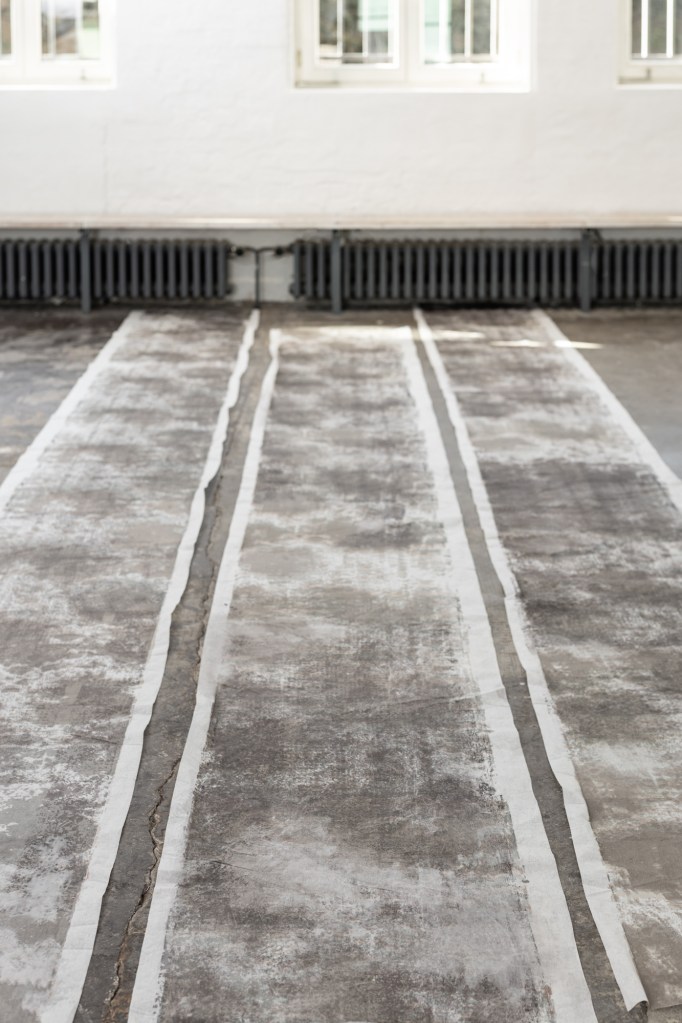
Vor Ort wurde die Papierrolle entlang der architektonischen Maße zugeschnitten und direkt, durch Abklatschen, auf Wand und Boden aufgebracht. Der Raum wurde nicht dekoriert, sondern durch seine eigenen Schichten und Passagen aktiviert.
Hier erscheint Ornament nicht als Schmuck, sondern als Modalität des Sichtbarwerdens – durch Wiederholung, Schichtung und Verschiebung. Begleitend zeigten zwei kleine Gemälde ein Fragment einer Gebäudetafel von 1907 und ein Detail aus Frans Hals’ Catharina Hooft mit ihrer Amme.
EN:
A Site: History and Ornament
The project is based on a concrete, almost archaeological analysis of the site – not to reconstruct its history, but to derive forms, surfaces, and visible residues from it. The starting point was the imprints on the floor of the exhibition space, recorded through drawing, painting, frottage, and photography, then transferred by screen print onto a long roll of industrial tea paper, thin and translucent. In the back-and-forth between studio and exhibition, structures, colors, and surfaces kept shifting – the motif almost dissolved and revealed new traces.
On site, the paper roll was cut according to the architectural dimensions and applied directly, by contact transfer, onto wall and floor. The space was not decorated but activated through its own layers and passages.
Here, ornament does not appear as decoration but as a modality of the visible – through repetition, layering, and displacement. Two small paintings accompanied the installation: one inspired by a building plaque dated 1907, the other by a textile detail from Frans Hals’ Catharina Hooft with her Nurse.
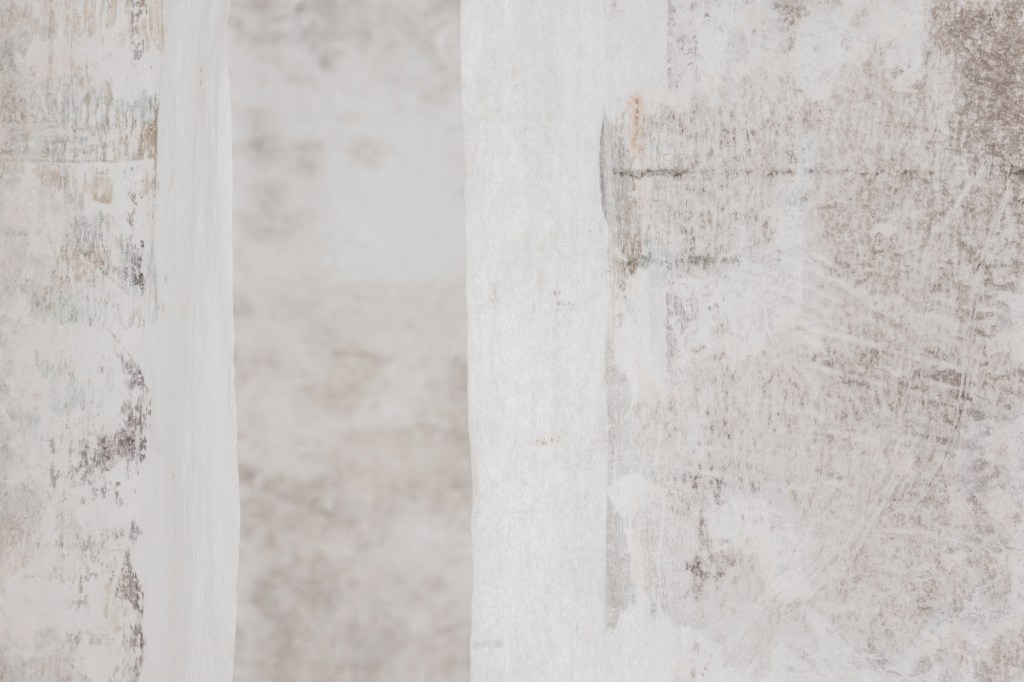
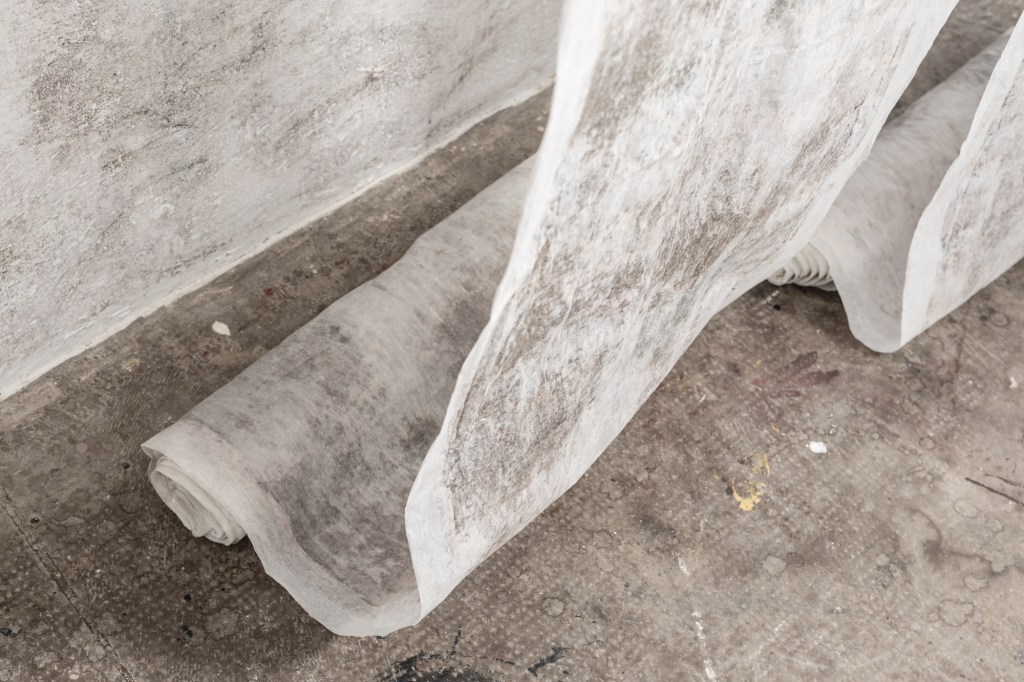
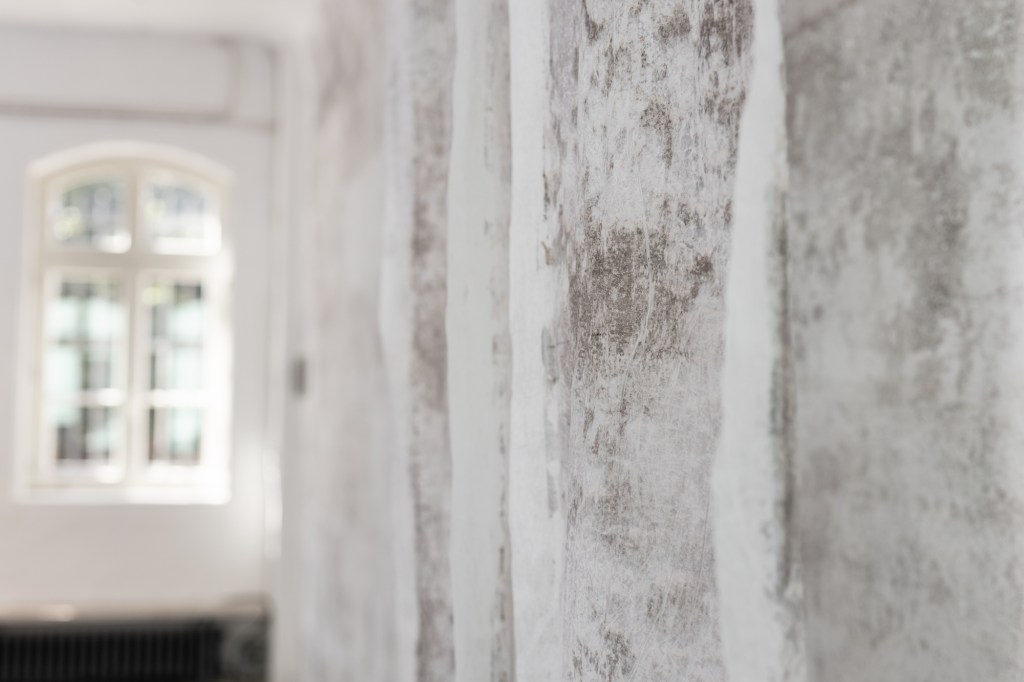
Foto: Hannah Jung, © Allgemeiner Konsumverein, 2025.
FR:
Un lieu : Histoire et ornement
Le projet repose sur une analyse concrète, presque archéologique, du lieu – non pour en reconstituer l’histoire, mais pour en dériver des formes, des surfaces et des résidus visibles. Point de départ : les empreintes au sol de l’espace d’exposition, relevées par dessin, peinture, frottage et photographie, puis transférées en sérigraphie sur un long rouleau de papier à thé industriel, fin et translucide. Dans le va-et-vient entre atelier et exposition, structures, couleurs et surfaces se transformaient sans cesse – le motif se dissolvait presque et laissait apparaître de nouvelles traces.
Sur place, le rouleau de papier a été découpé selon les mesures architecturales et appliqué directement, par contact, sur le mur et le sol. L’espace n’était pas décoré mais activé à travers ses propres strates et passages.
Ici, l’ornement n’apparaît pas comme décoratif, mais comme modalité du visible – par répétition, superposition et déplacement. Deux petites peintures accompagnaient l’installation : l’une inspirée d’une plaque datée de 1907 à l’entrée du bâtiment, l’autre d’un détail textile issu du tableau Catharina Hooft et sa nourrice de Frans Hals.
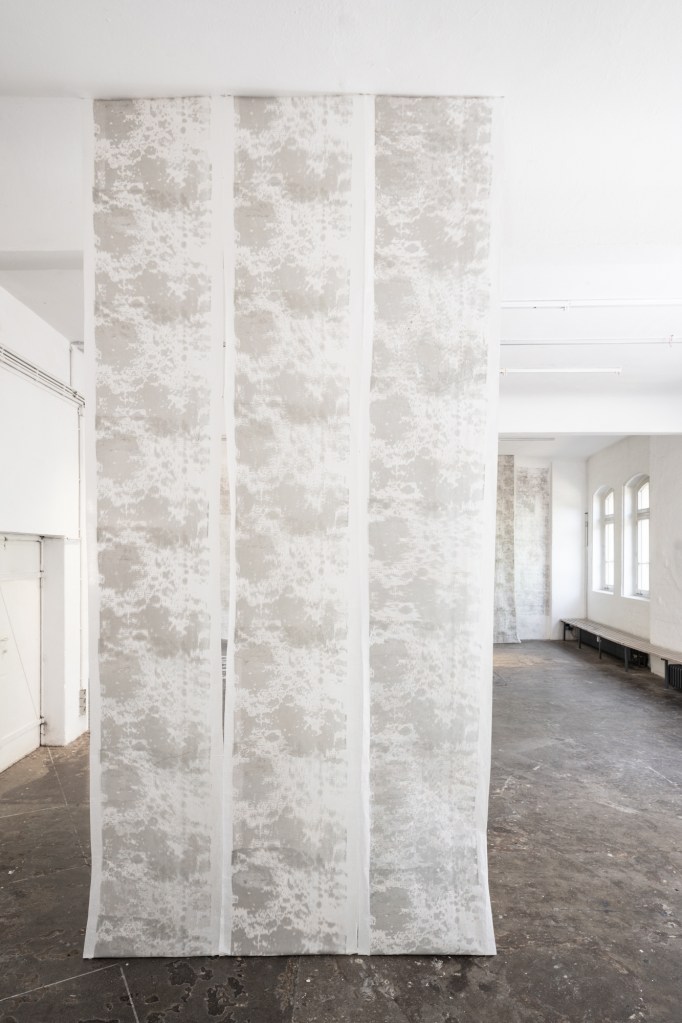
Foto: Hannah Jung, © Allgemeiner Konsumverein, 2025.
 Marthe Lallemand