upcoming – HGB Bibliothek
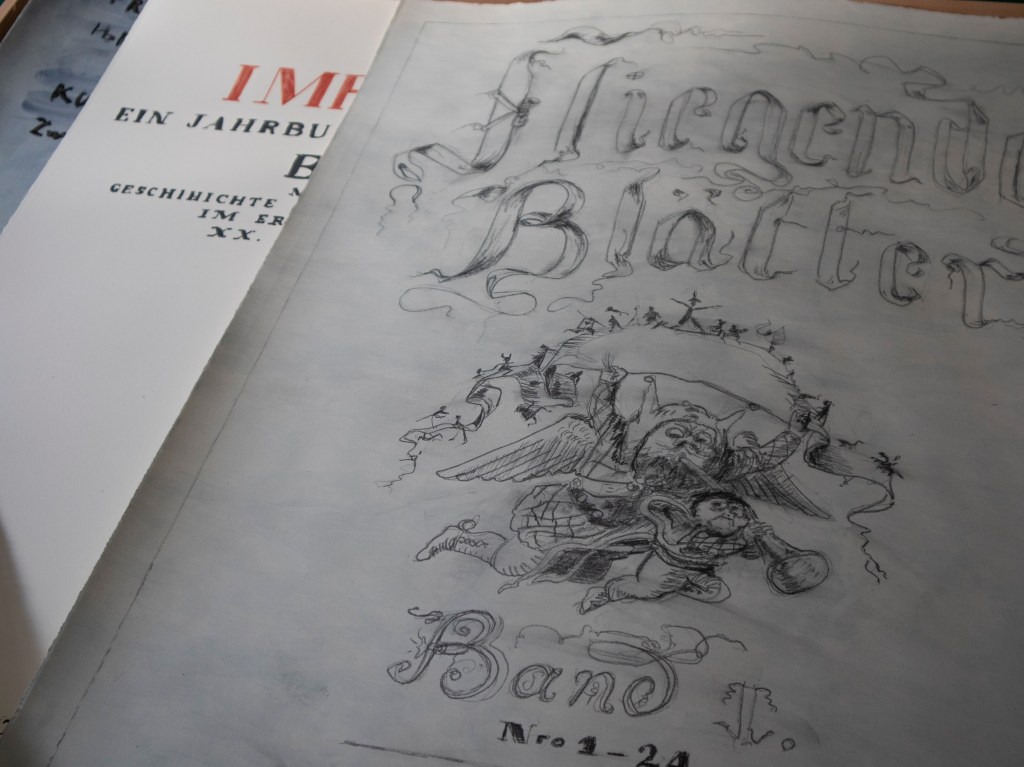
Hidden Treasures No. 8: Fliegende Blätter
27.10.2026–16.04.2027. Eröffnung: 16:30 Uhr
kuratiert von Marthe Lallemand nach einer Idee von Dr. Regine Ehleiter
Halle – Leipzig International \ 30.5.–23.8.2026
ZAK \ Galerie \ EG Zentrum für Aktuelle Kunst Zitadelle \ Am Juliusturm 64 \ 13599 Berlin
Startbahn frei für aktuelle Arbeiten von Studierenden, Absolvent*innen und Meisterschüler*innen der Fachklasse für Malerei und Grafik von Prof. Kerstin Drechsel an der Hochschule für Grafik und Buchkunst Leipzig und der Fachklasse für
Malerei von Prof. Tilo Baumgärtel und Prof. Heide Nord an der Burg Giebichenstein Kunsthochschule Halle.
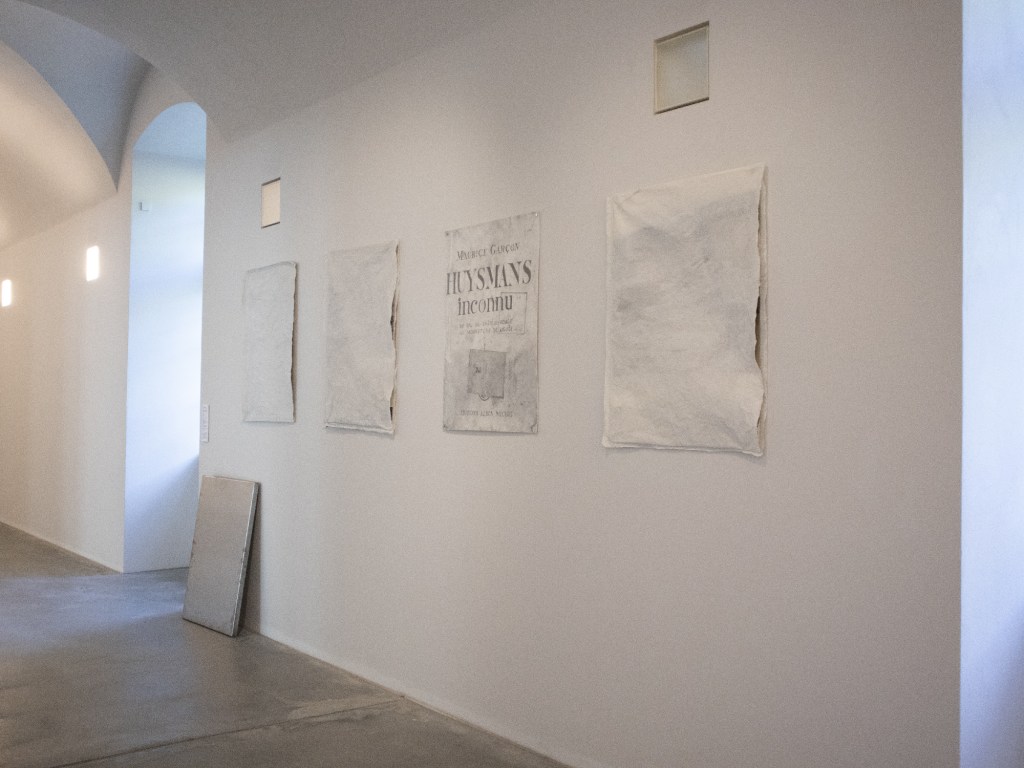
Marthe Lallemand — Halle-Leipzig International, ZAK, Zitadelle Spandau, 2026
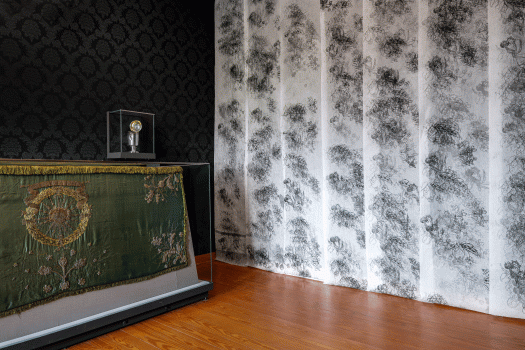
Aus der Spur (ALTAR) ist dauerhaft in Agathenburg zu sehen !
Ein Arbeit , entwickelt im Rahmen der Gruppenausstellung Aus der Spur, Schloss Agathenburg 2025 kuratiert von Claudia Rasztar
DE
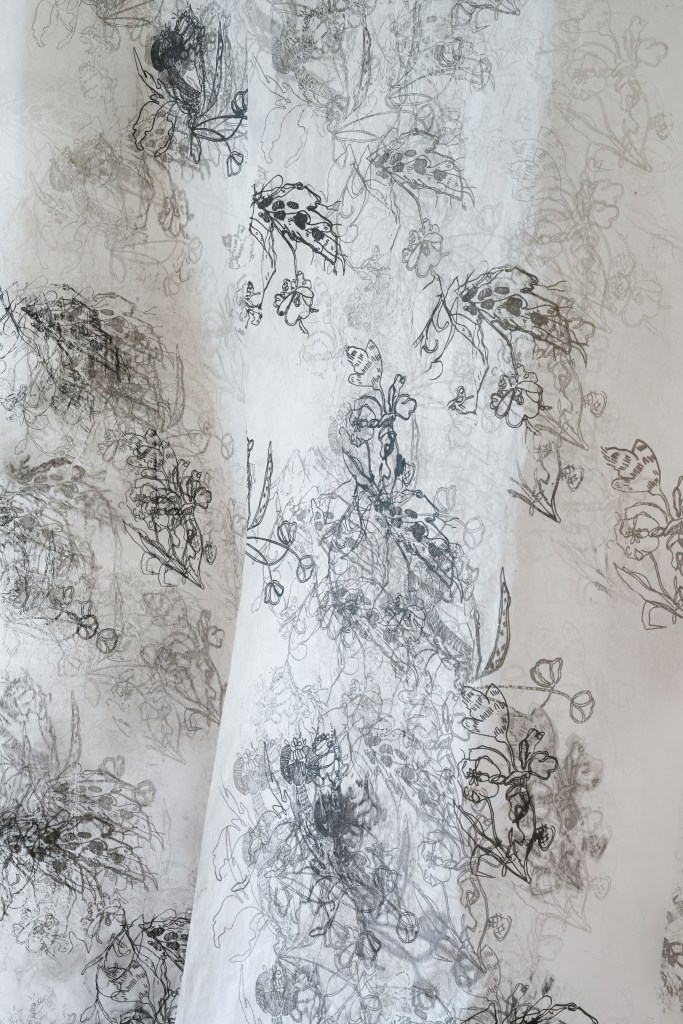
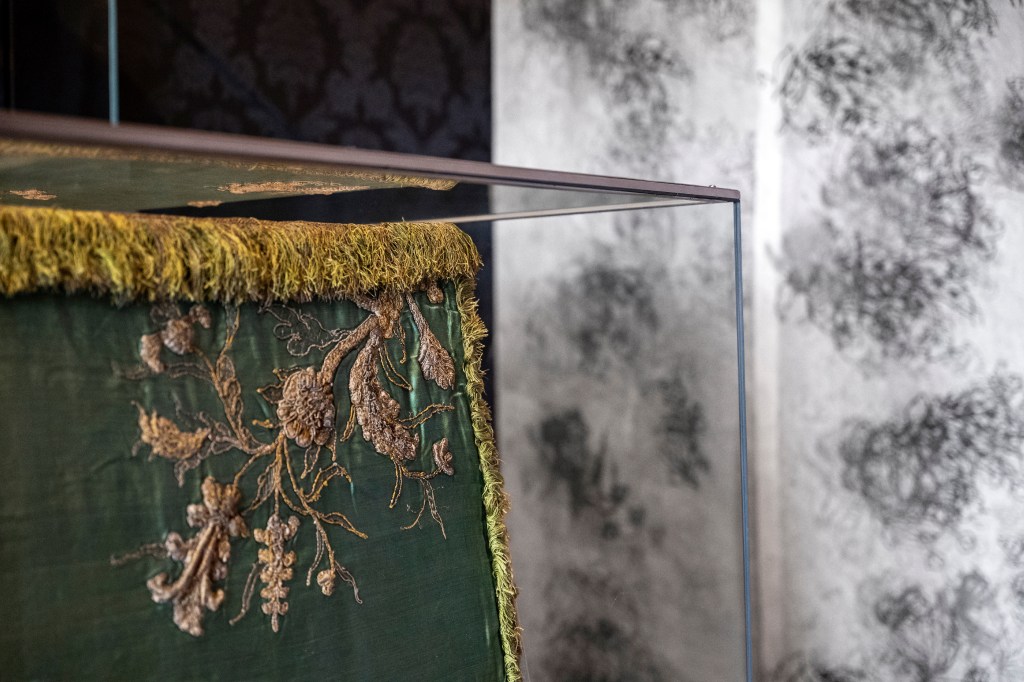
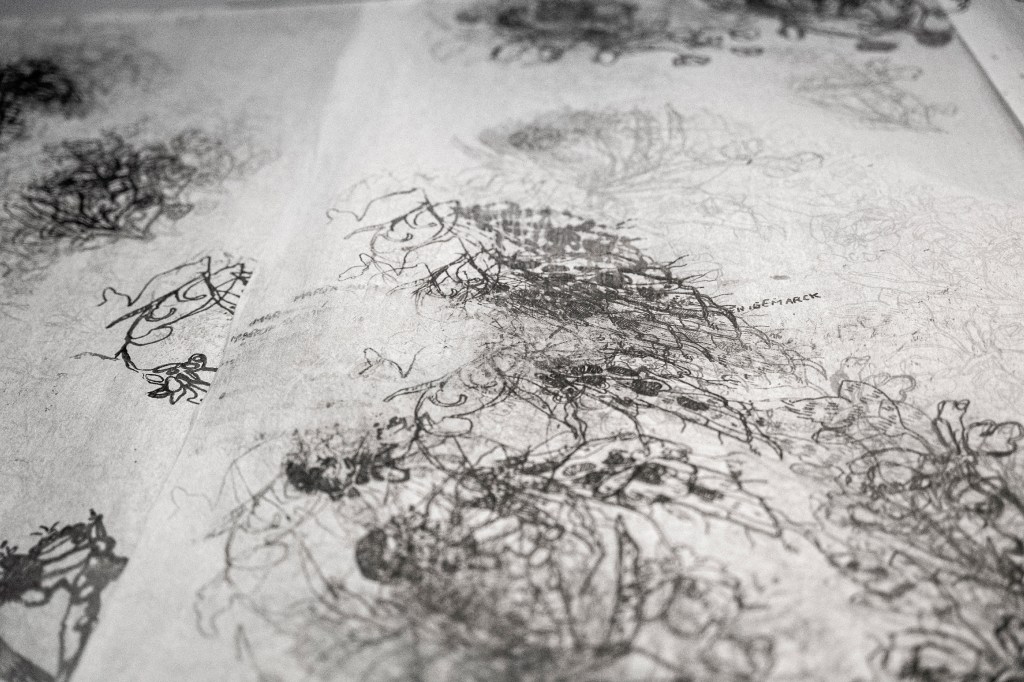
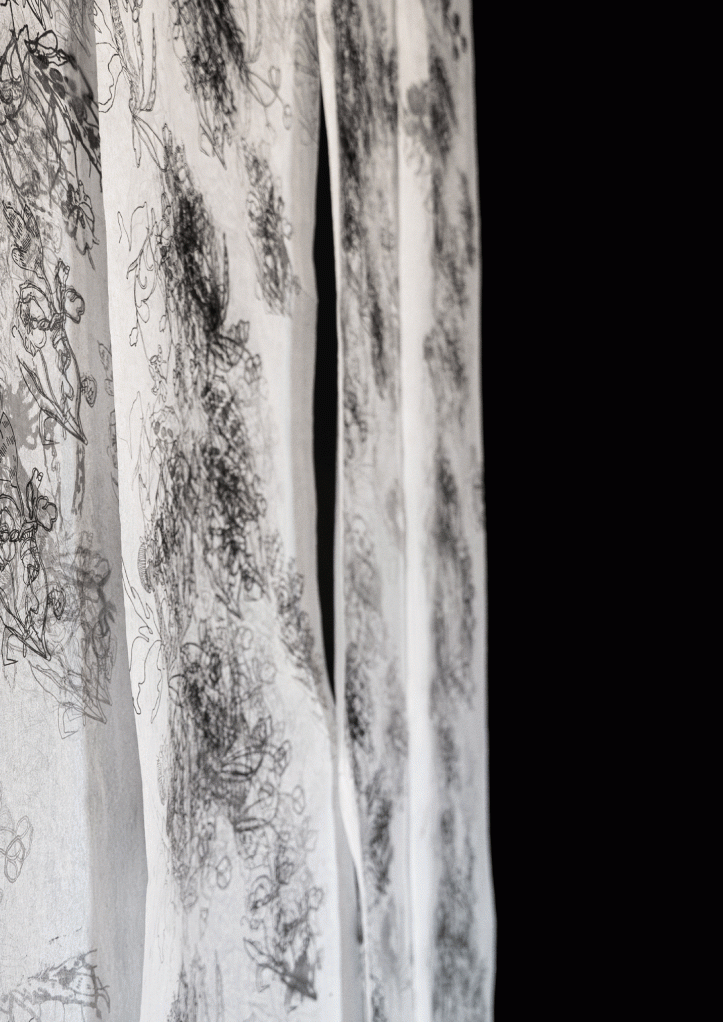
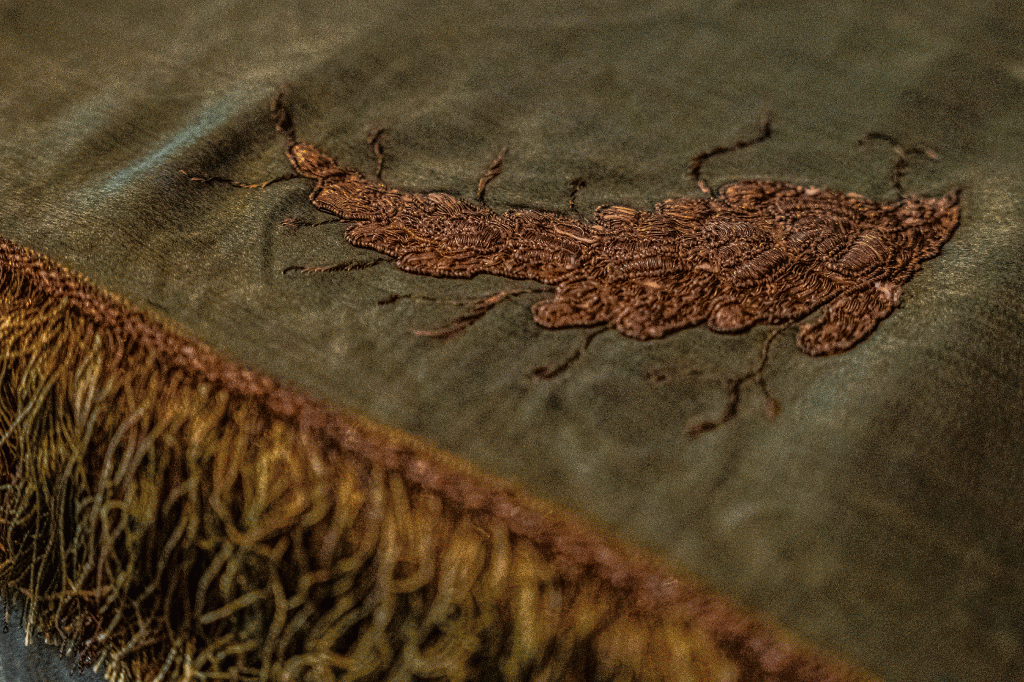
Aus der Spur (ALTAR), inspiriert vom textilen Altar des 17. Jahrhunderts, wird in situ im Witwensaal gezeigt, im Dialog mit der Dauerausstellung: Serigrafie auf Teepapier, Transparenz und Überlagerungen.
Das Projekt entwickelt sich aus einer Analyse von Ornament, Zeichnung und den Schichtungen des Textils.
EN
Outside the Line (ALTAR), inspired by the 17th‑century altar textile, is presented in situ in the Widow’s Room, in dialogue with the permanent collection: screen‑printed tea paper, transparency and layered superpositions.
The project evolves from an analysis of ornament, drawing, and the layered structure of the textile.
Ein Ort: Geschichte und Ornament (A Site: History and Ornament)– Einzelausstellung / Solo Exhibition
Allgemeiner Konsumverein, Braunschweig
07.08.–07.09.2025
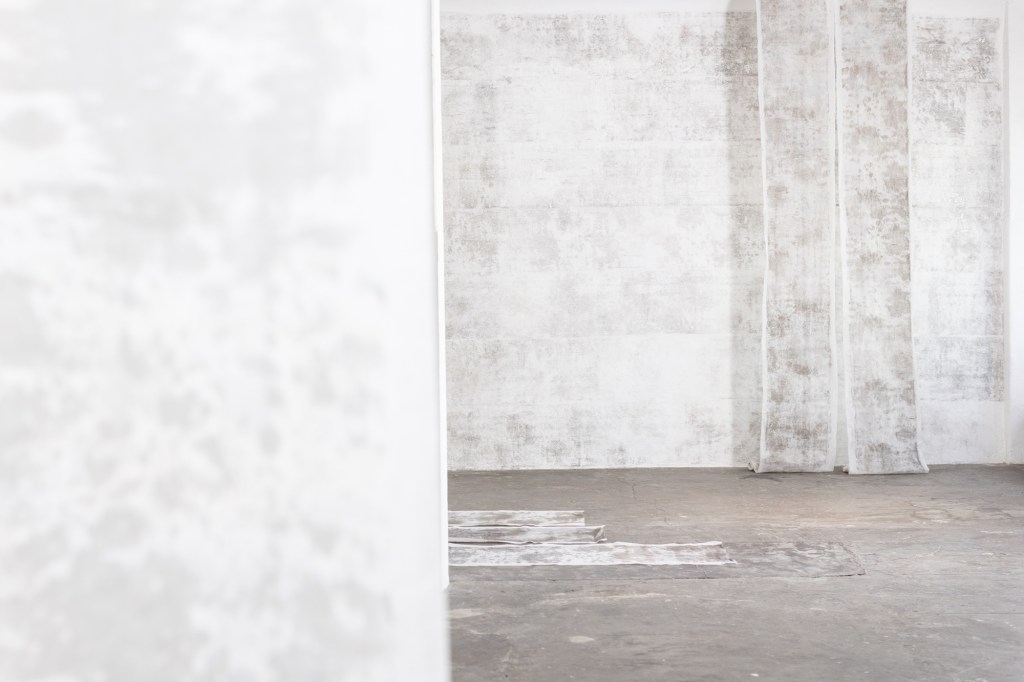
Ein Ort: Geschichte und Ornament (english below)
Abklatschen, Siebdruck auf Teepapier, 6 Schichten, 120m × 60 cm. Erstmals direkt vor Ort auf die Wand gedruckt, um unsichtbare Spuren sichtbar zu machen. Vielen Dank an den Allgemeiner Konsum e. V., den Kunstvereine und besonders an Anne M. von der Haegen.
A Site: History and Ornament
Abklatschen (transfer by contact), screen print on tea paper, 6 layers, 120m × 60 cm. First printed directly on site onto the wall to reveal invisible traces. Many thanks to Allgemeiner Konsum e. V.,, Kunstvereine, and especially to Anne M. von der Haegen.
Lallemand-e I Die Deutsche
Postdiplom-Abschluss HGB – 2024
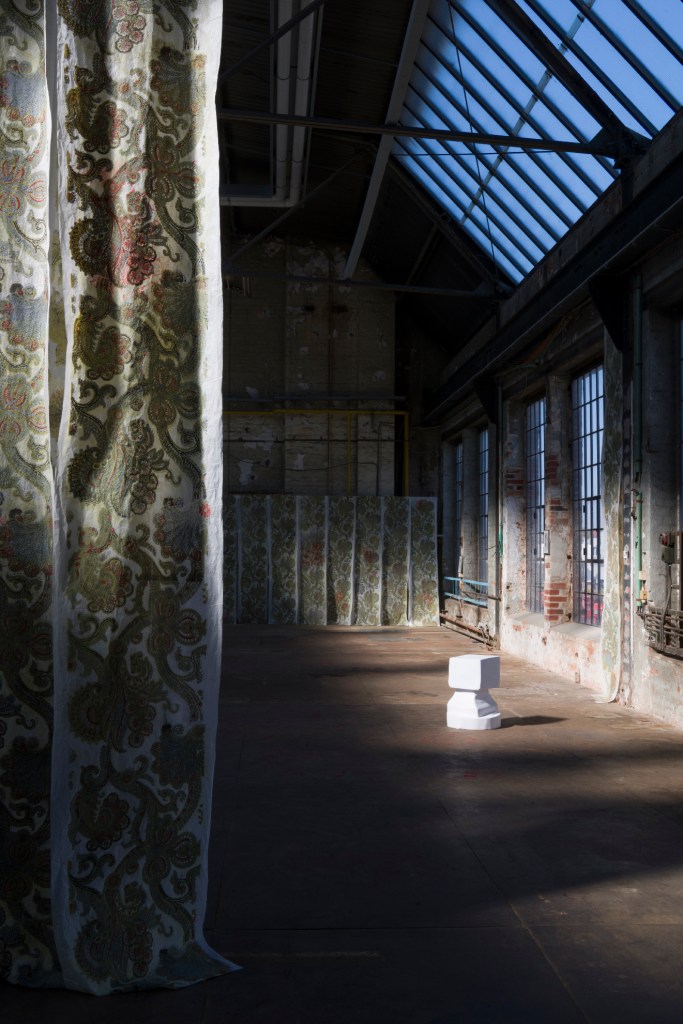
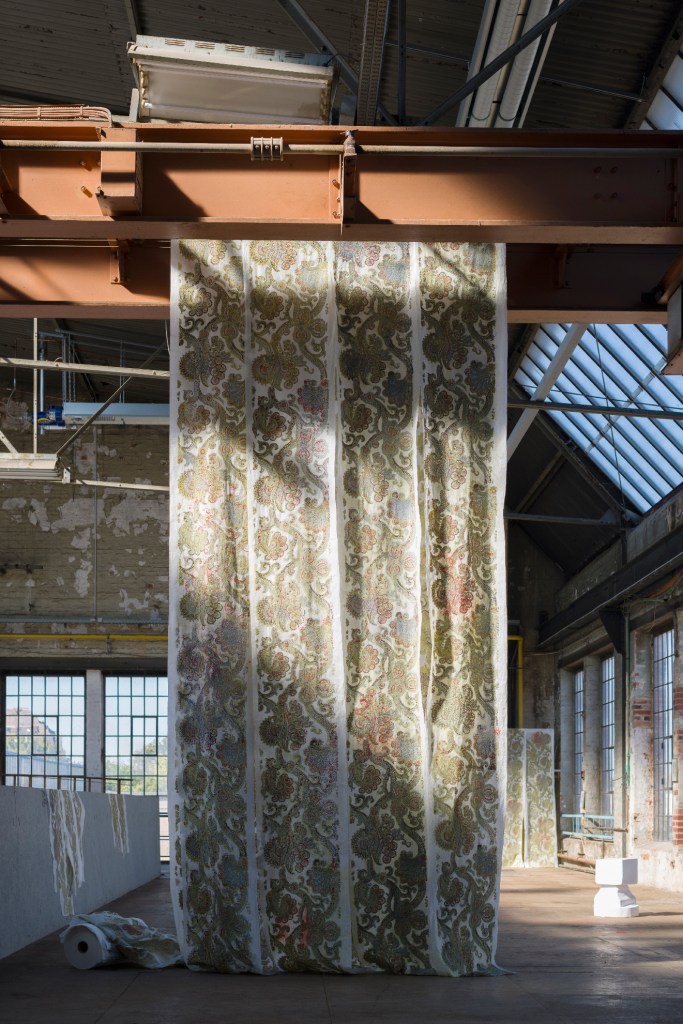
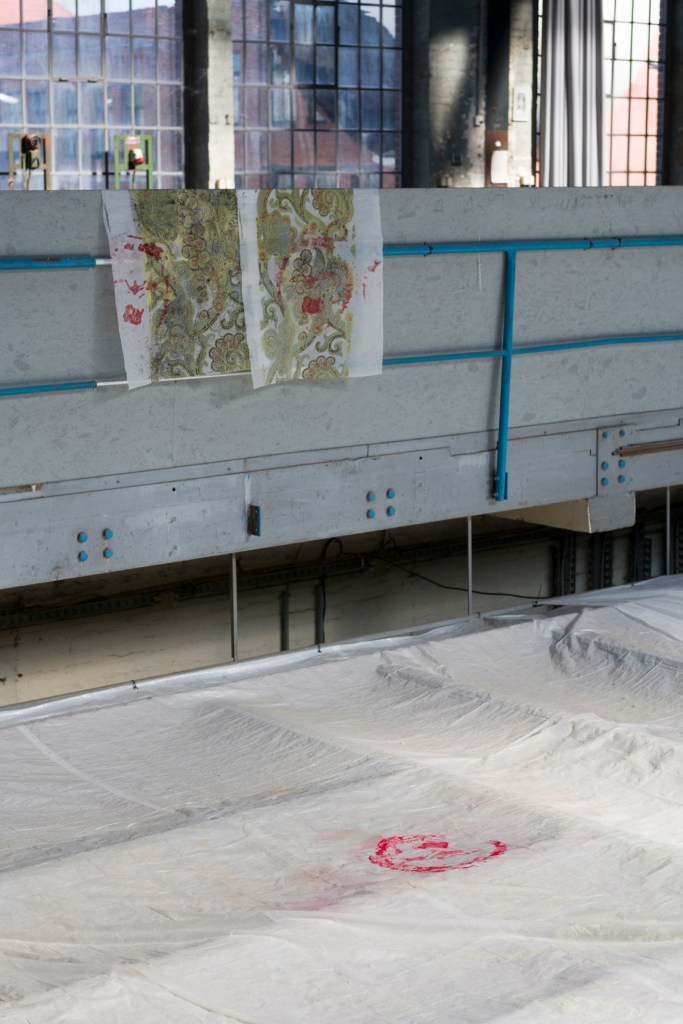
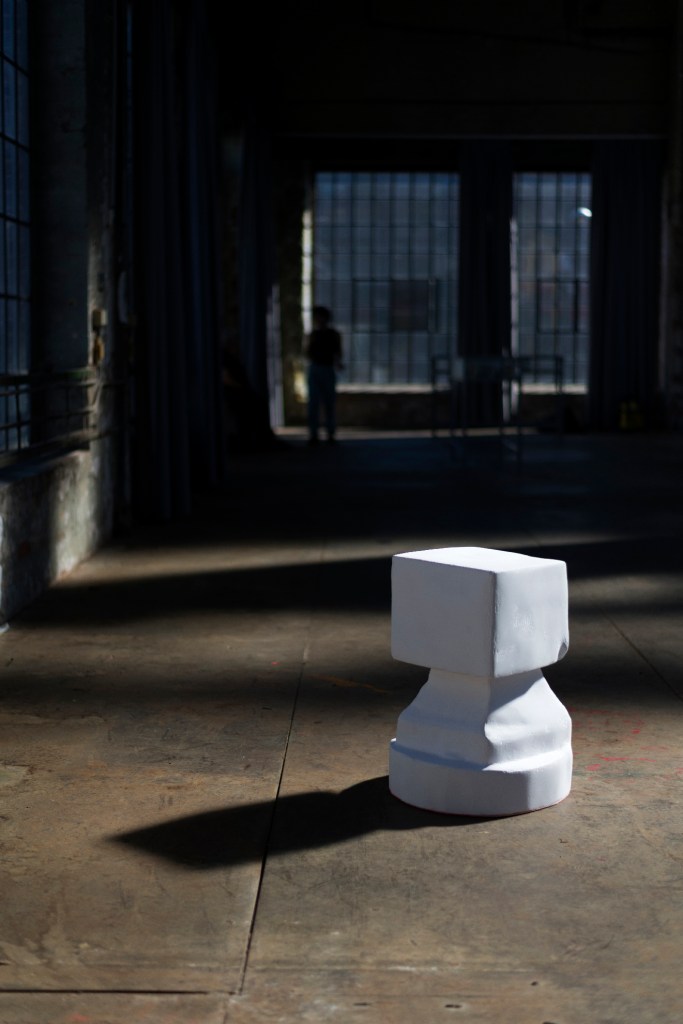
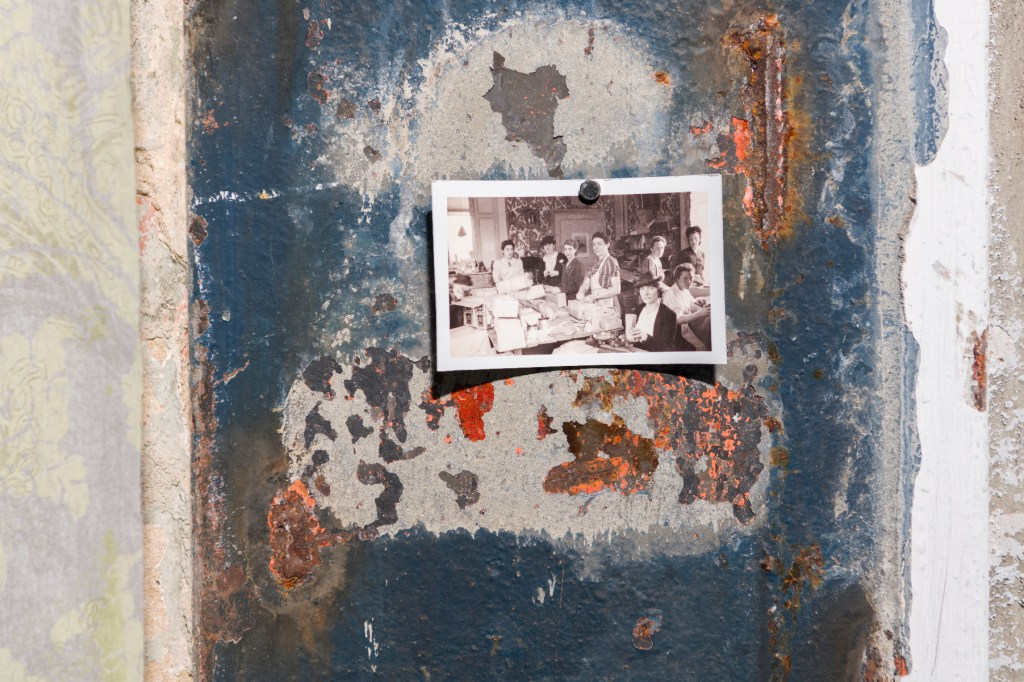
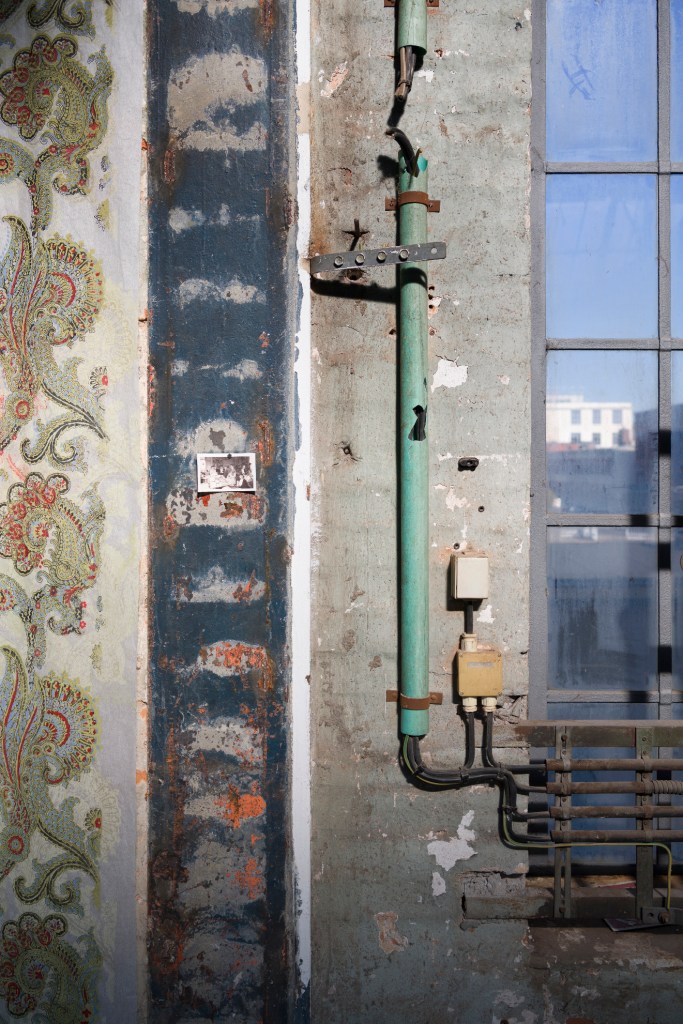
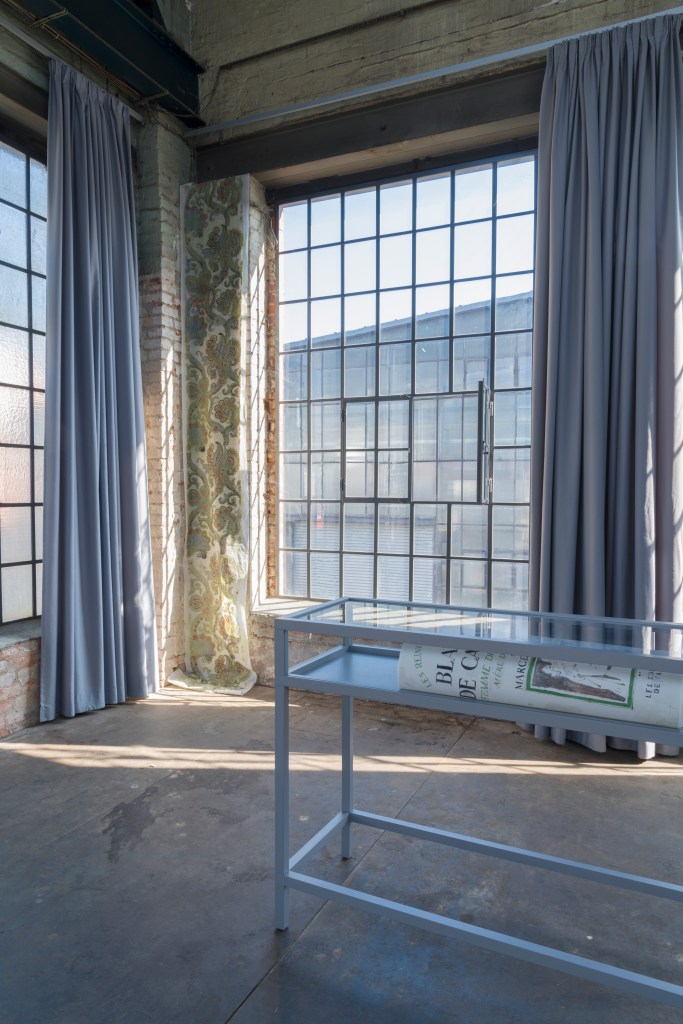
“Lallemand-e I Die Deutsche” Technesphere Kirow- Leipzig
Picture: Ronny Aviram © Marthe Lallemand 2024
EN:
In September 2024, I completed my postgraduate program in Painting and Graphics at HGB Leipzig under the supervision of Kerstin Drechsel.
The resulting project, “Lallemand-eI Die Deutsche” revisits earlier themes in my work and reflects on representation and visibility.
DE:
Im September 2024 schloss ich mein Postgraduiertenstudium in Malerei und Grafik an der HGB Leipzig unter der Betreuung von Kerstin Drechsel ab.
Das daraus entstandene Projekt Lallemand-eI Die Deutsche greift frühere Themen meiner Arbeit auf und reflektiert über Repräsentation und Sichtbarkeit.
Identity March 8–10, 2024
(curated by DAG)
Harriet Groß, Dorothee Haller, Franz Jyrch, Marthe Lallemand, Dennis Rudolph, Gyula Sági, Andreas Steffen, Björn Streeck, Pfadfinderei (Video).
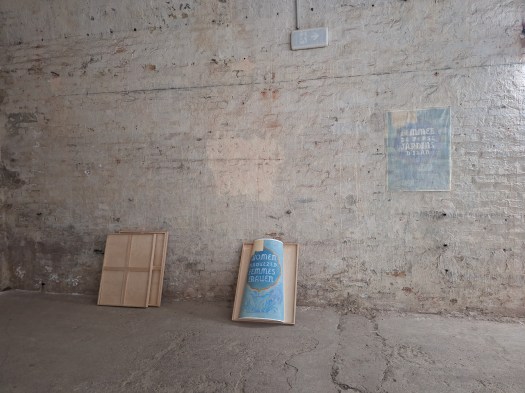
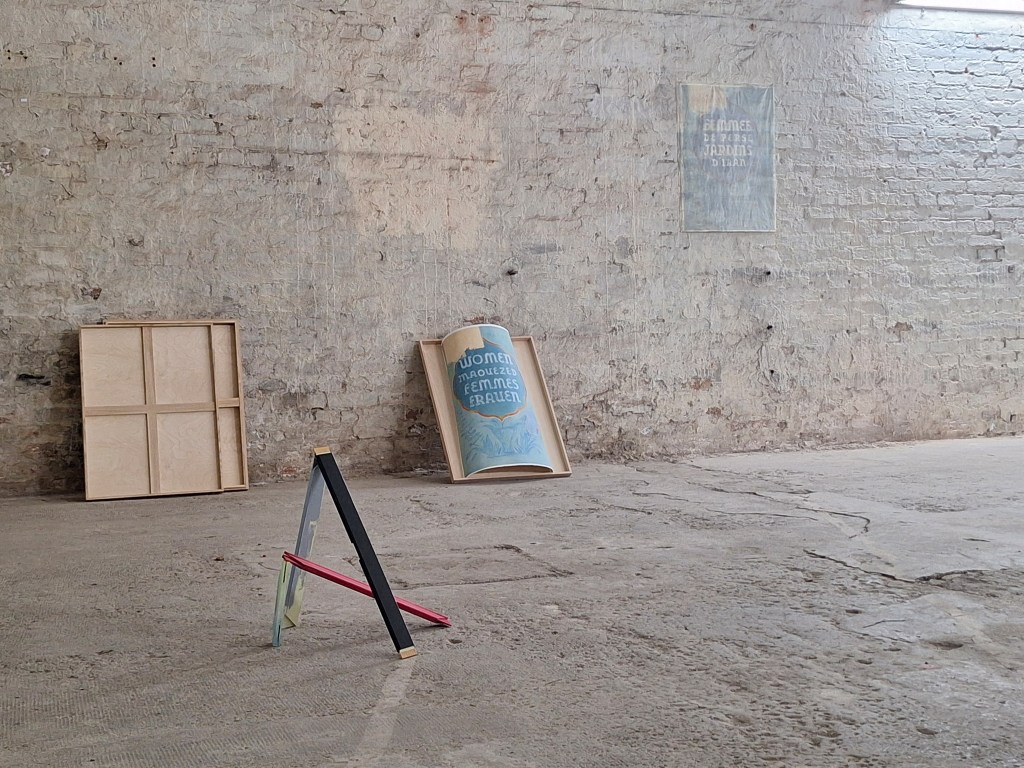
Exhibition view. Wooden boxes, oil and acrylic on paper and tea paper – Glue by DAG. International Women’s Day © Marthe Lallemand 2024
EN:
For the group show Identity at Glue (March 2024), I presented a work derived from research into gendered imagery and family traces. A reimagined book cover, blending camouflage and multilingual references to “woman,” reflects my cultural multiplicity and the erasure of female authorship.
DE:
Zur Gruppenausstellung Identity bei Glue (März 2024) zeigte ich eine Arbeit, die sich mit Geschlechterbildern und familiären Spuren auseinandersetzt. Ein neu gestalteter Buchumschlag mit Tarnmotiv und mehrsprachigem „Frau“-Bezug thematisiert kulturelle Vielfalt und die Auslöschung weiblicher Autorschaft.
Lallemand-e I Die Deutsche Part 1: dedecus, decor (2023)
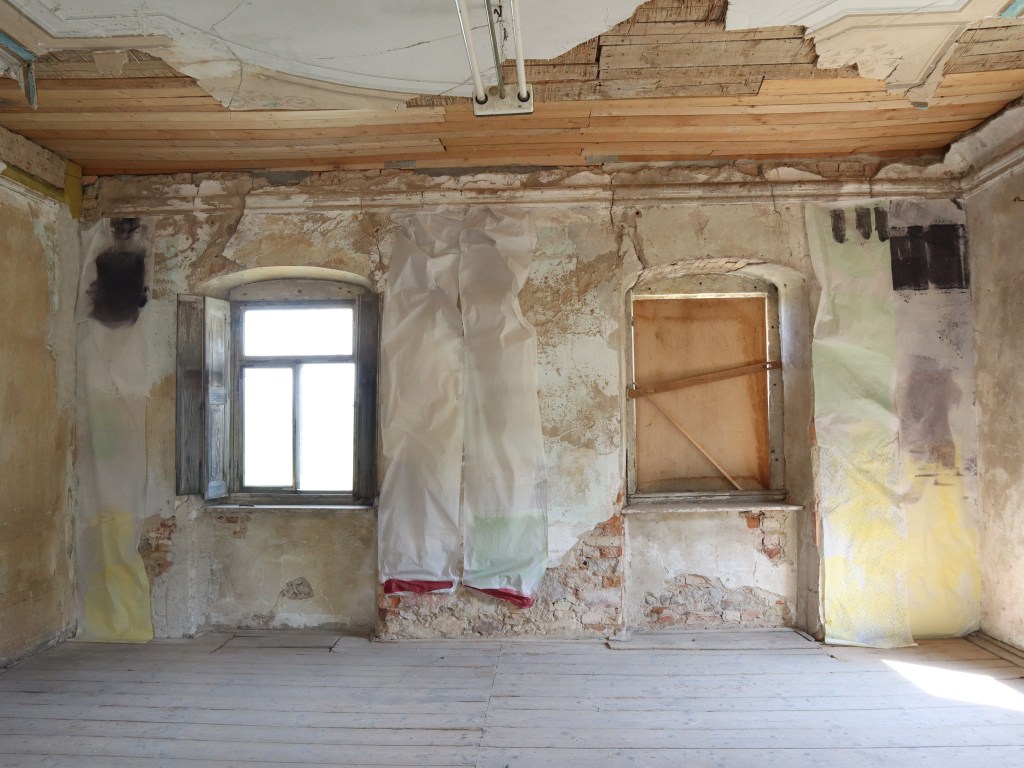
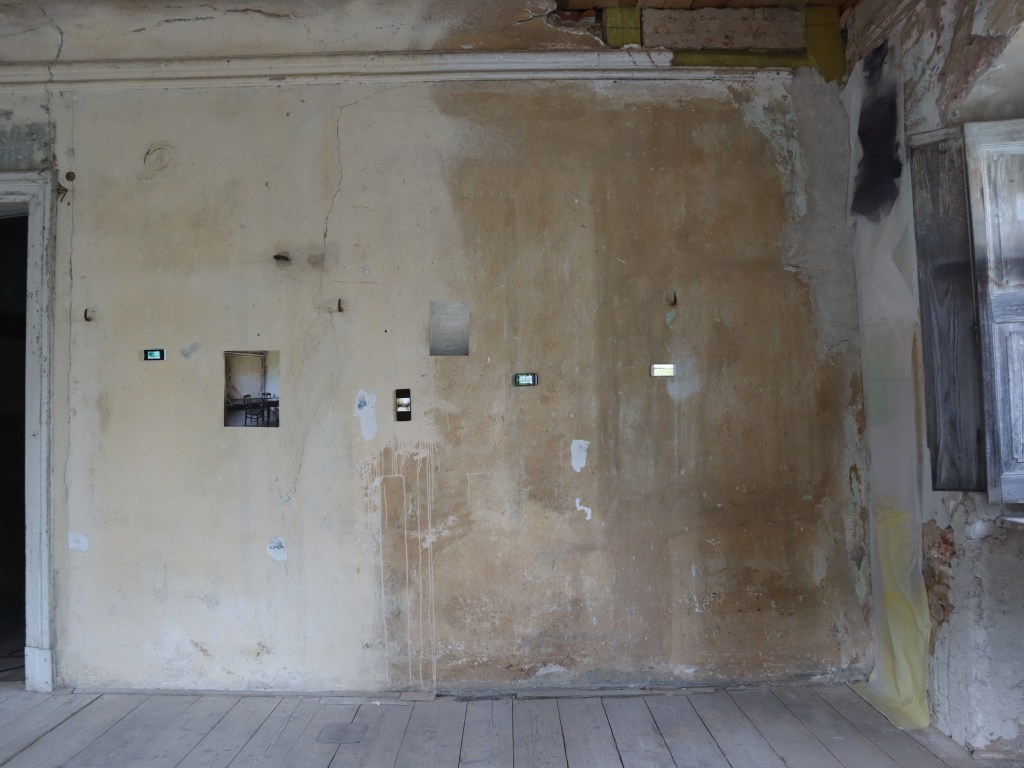
Video, silkscreen, tea paper, smartphones, and digital print – © Marthe Lallemand 2023
EN:
This project began while I was working at Berggut Oschatz, when I came across a handwritten note by my grandfather, detained in Germany from 1940 to 1945.
This discovery initiated an artistic research combining family memory, archives, and painting.
The full process is detailed on the dedicated research page, with links to Elsterhorst and Berggut Oschatz.
This research project is funded by the Kulturstiftung des Freistaates Sachsen and the Museum Hoyerswerda/Dokumentationszentrum Elsterhorst.
DE:
Das Projekt begann während meiner Arbeit im Berggut Oschatz, als ich eine handschriftliche Notiz meines Großvaters entdeckte, der zwischen 1940 und 1945 in Deutschland inhaftiert war.
Diese Entdeckung löste eine künstlerische Recherche aus, in der sich familiäres Gedächtnis, Archivmaterial und Malerei verbinden.
Der gesamte Prozess ist auf der Recherche-Seite dokumentiert, in Verbindung mit Elsterhorst und dem Berggut Oschatz.
Metawahr (2023)

EN:
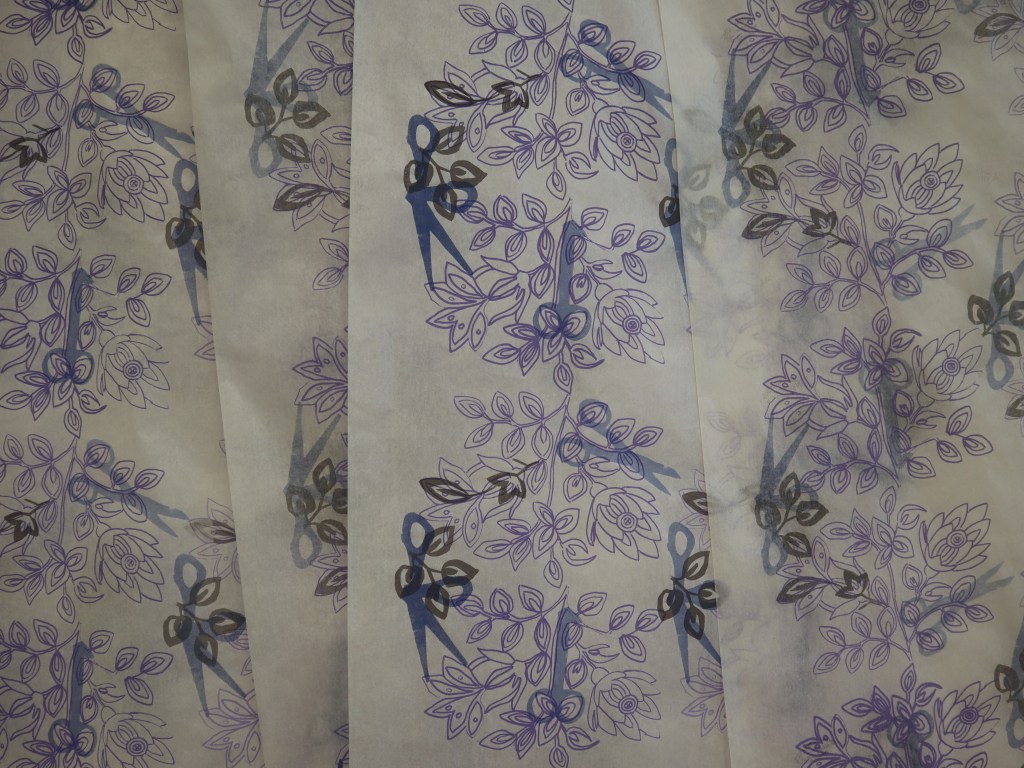
In this work, I created a fictional wallpaper using screen-printed tea paper, inspired by feminist motifs.
Layering archival material and classical imagery, I explored how personal and political concerns—especially after October 2022 in Iran—could enter the surface.
Questions of identity and representation shaped this new visual practice.
DE:
In dieser Arbeit entwickelte ich eine fiktive Tapete auf Teepapier im Siebdruck, inspiriert von feministischen Motiven.
Durch das Schichten von Archivmaterial und klassischen Bildzitaten untersuchte ich, wie persönliche und politische Themen – insbesondere nach Oktober 2022 im Iran – in die Oberfläche eintreten können.
Fragen nach Identität und Darstellung prägten diese neue visuelle Praxis.
L’envers du décor / behind the scenes
Berlin (DE)- Lokorn (BZH) 2020
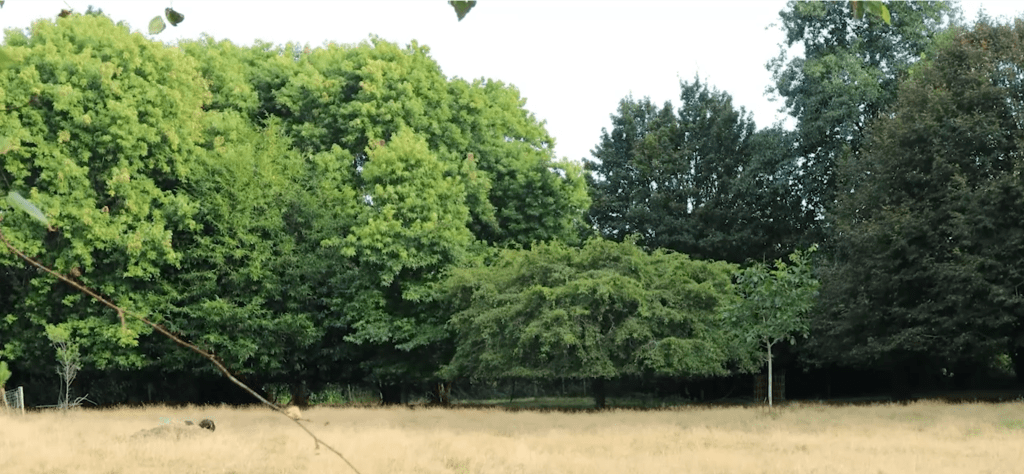
“tarnung” – short video. screenshot. 2022
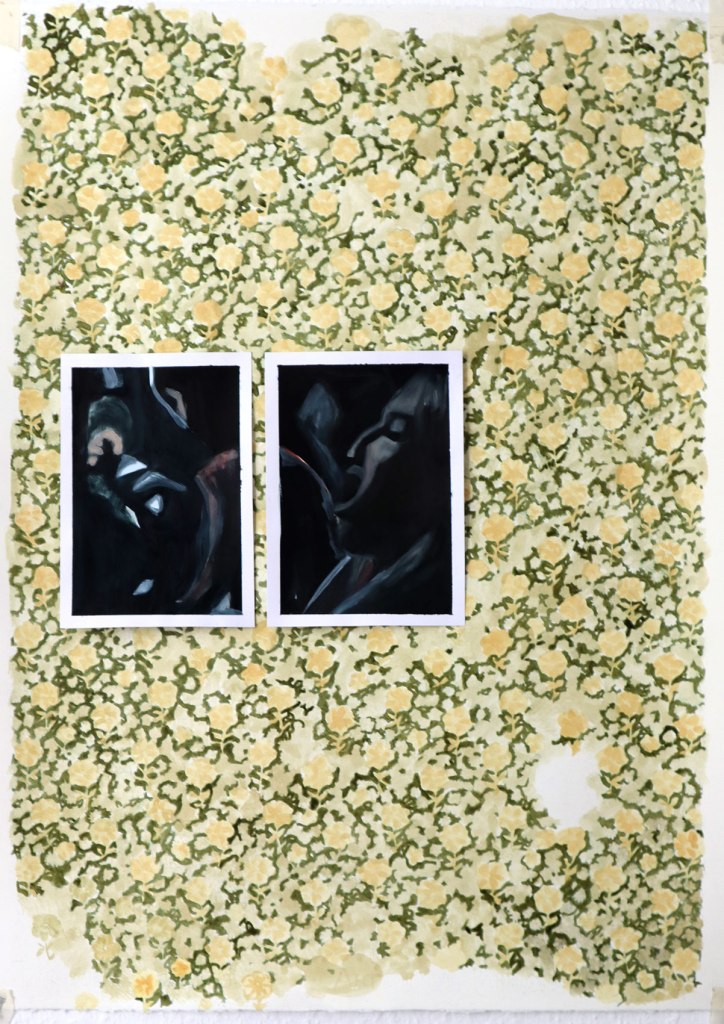
EN:
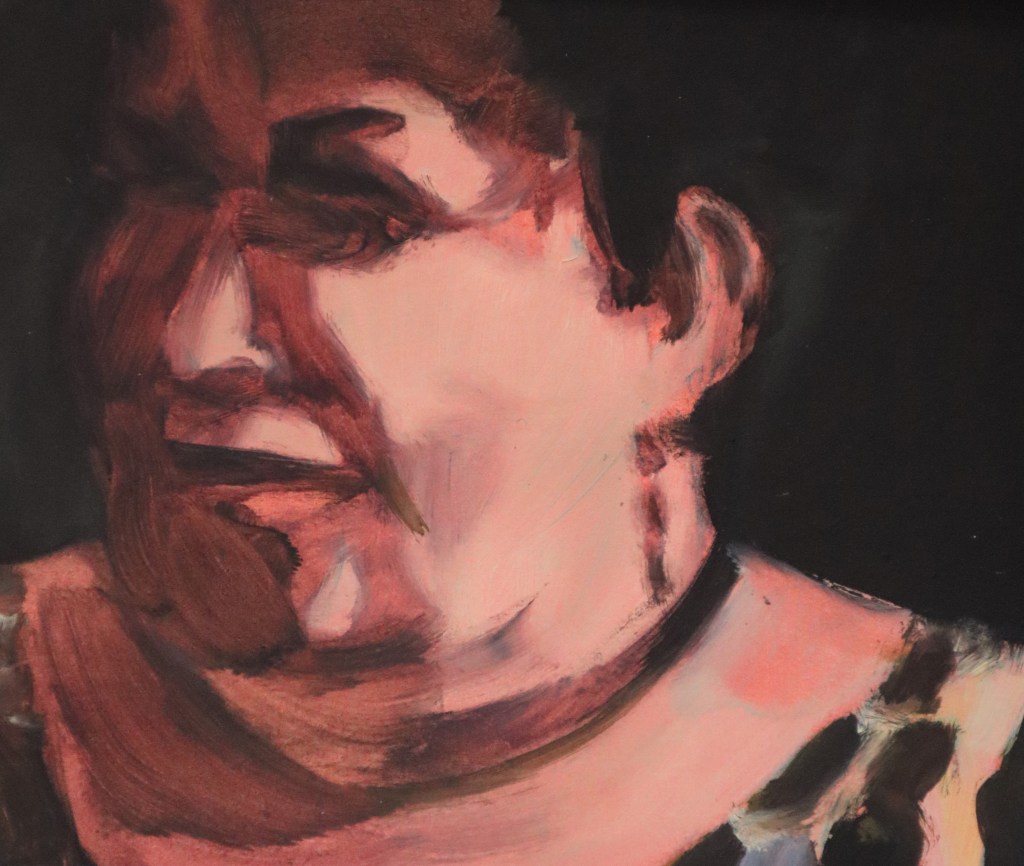
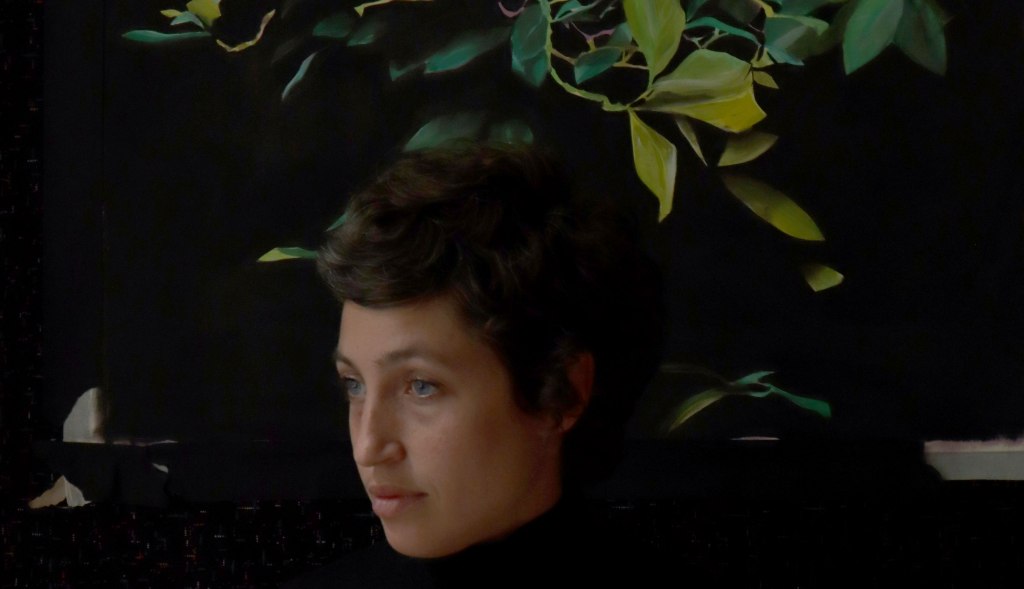
This project is an early attempt to create a dialogue between painting and film production.
I explore how a painted image can serve as a set — both as a visual space and a narrative base.
The painting is not a finished image, but a scene in construction, meant to host a future film.
I also reflect on what happens outside the frame, and how painting can engage with that off-screen space.
DE:
Dieses Projekt ist ein erster Versuch, Malerei und Filmproduktion miteinander in Dialog zu bringen.
Ich untersuche, wie ein gemaltes Bild als Kulisse dienen kann – sowohl als visueller Raum als auch als erzählerischer Ausgangspunkt.
Die Malerei ist hier kein fertiges Bild, sondern eine Szene im Aufbau, gedacht als Grundlage für einen zukünftigen Film.
Ich denke dabei auch über das Geschehen außerhalb des Bildausschnitts nach – und darüber, wie Malerei sich auf diesen Off-Screen-Raum beziehen kann.
Abalamour je parle, my love /Because I speak, my love
Penn da Benn Bookstore Quimperle – 2019
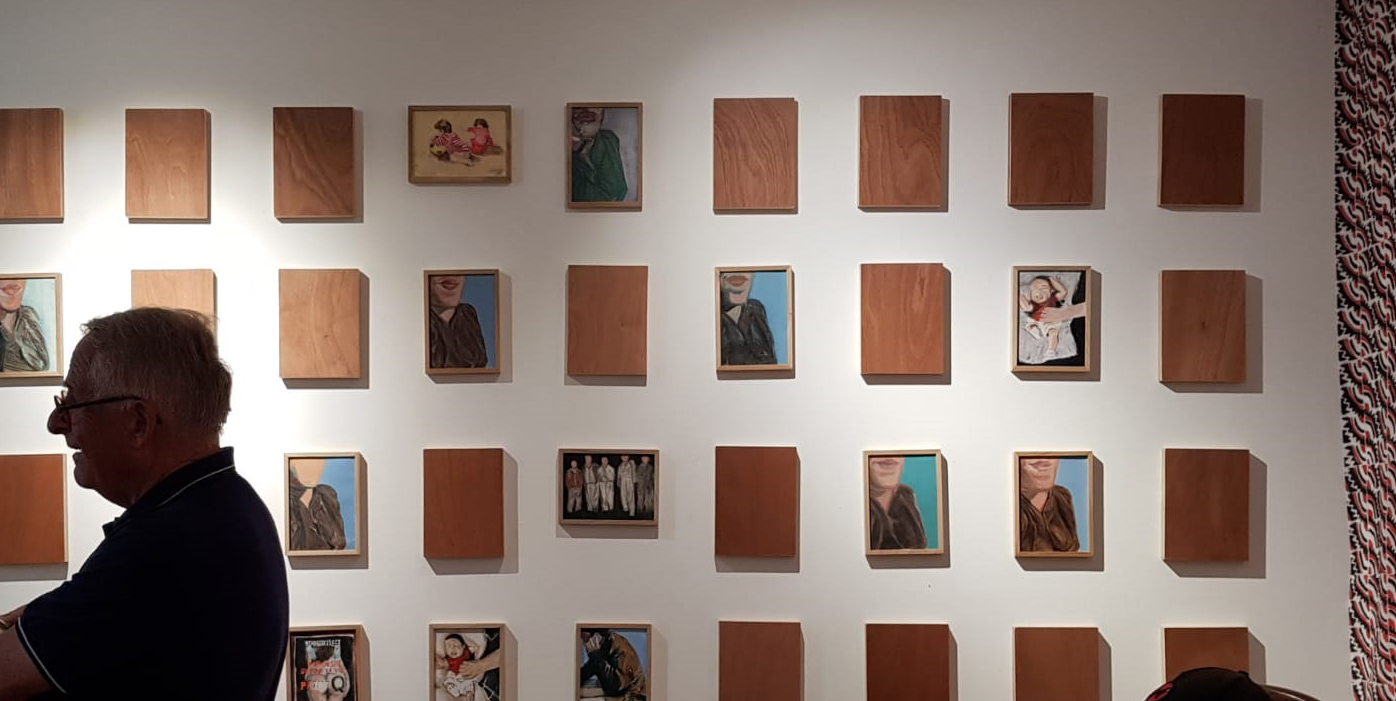
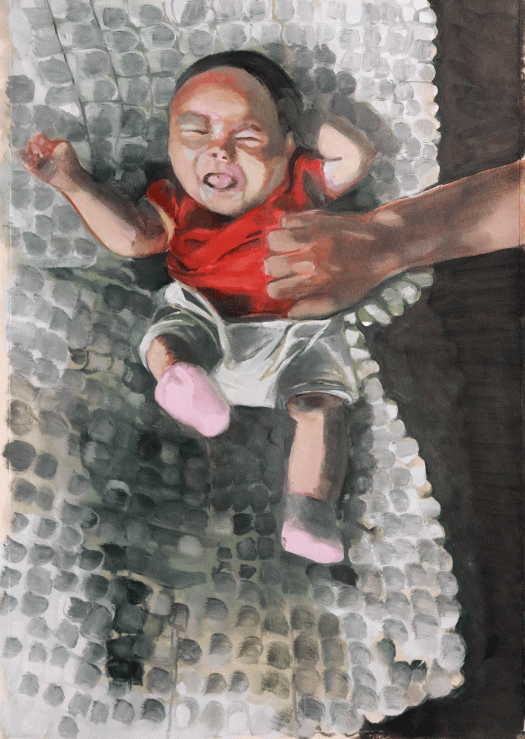
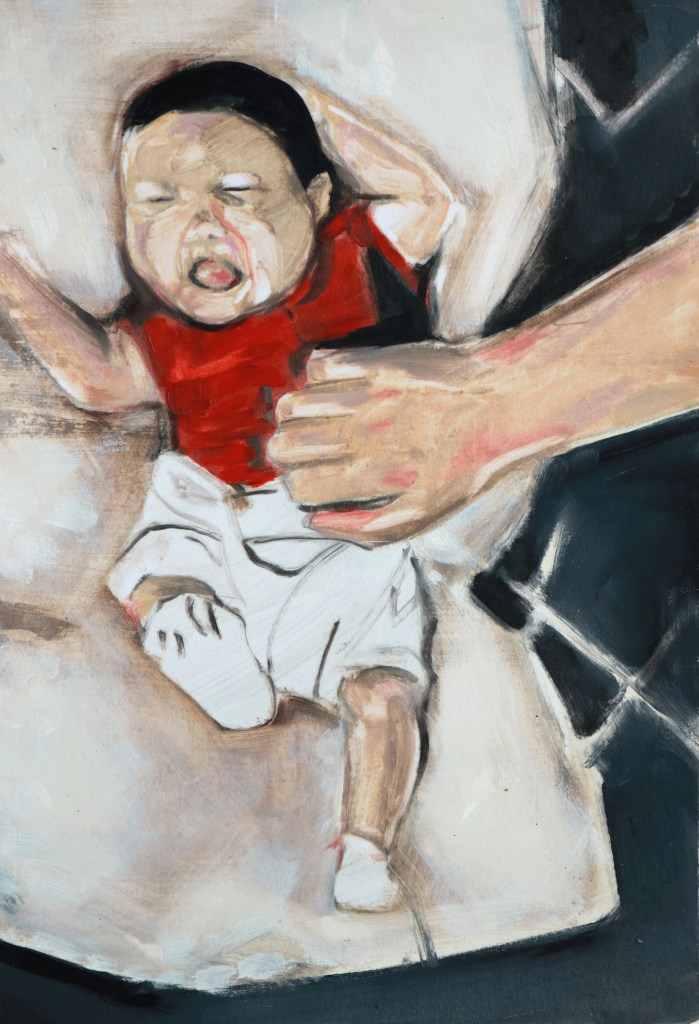
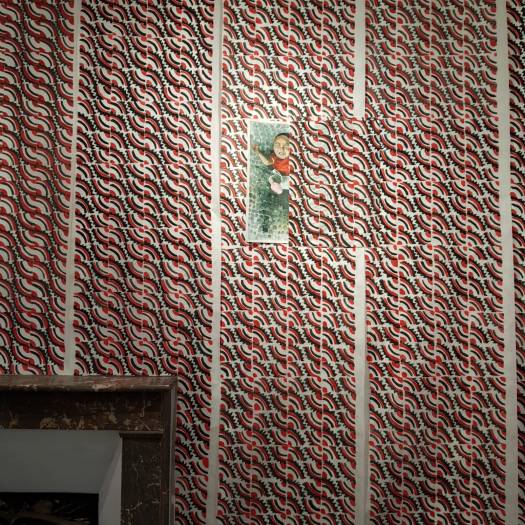
EN:
Abalamour, je parle my love begins with a family photograph where a cry passes through the body of a child.
In Breton, Abalamour means “because,” but in French it echoes as “destroys love.”
The cry is echoed in miniature paintings placed inside wooden boxes that viewers may choose to open or leave closed, accompanied by a hand-painted Seiz Breur pattern on translucent paper in a field of appearance.
DE:
Abalamour, je parle my love beginnt mit einer Familienfotografie, in der ein Schrei den Körper eines Kindes durchquert.
Im Bretonischen bedeutet Abalamour „weil“, im Französischen klingt es wie „tötet die Liebe“.
Der Schrei wiederholt sich in Miniaturgemälden, die in Holzkästen platziert sind, die von den Besucherinnen und Besuchern geöffnet oder geschlossen bleiben können, begleitet von einem handgemalten Seiz-Breur-Muster auf durchscheinendem Papier in einem Feld der Erscheinung.
Collective graduate show at Lieu-Commun, Toulouse / enveloppe de camouflage
Lieu-Commun. Toulouse – 2018
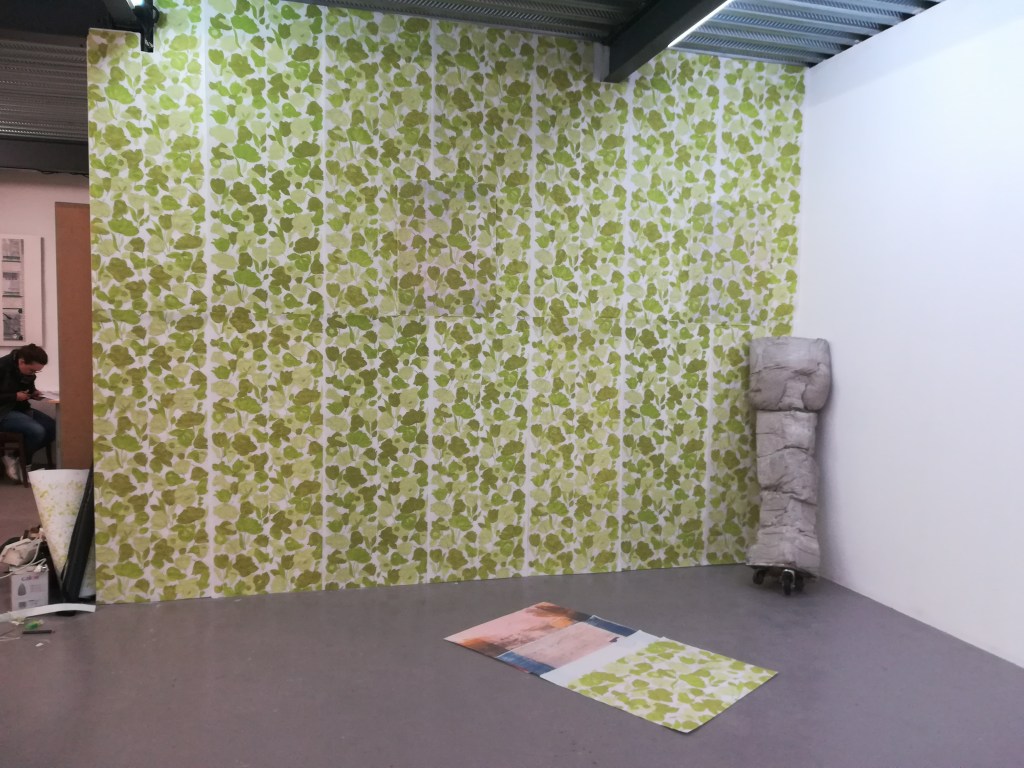
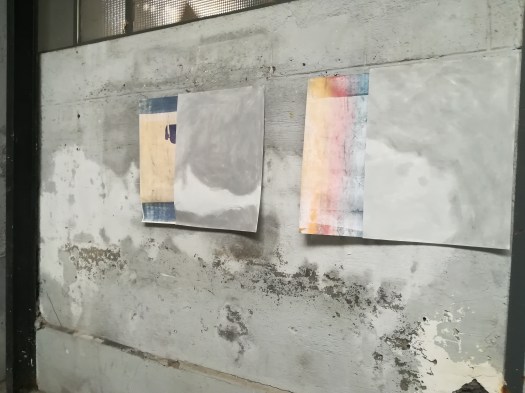
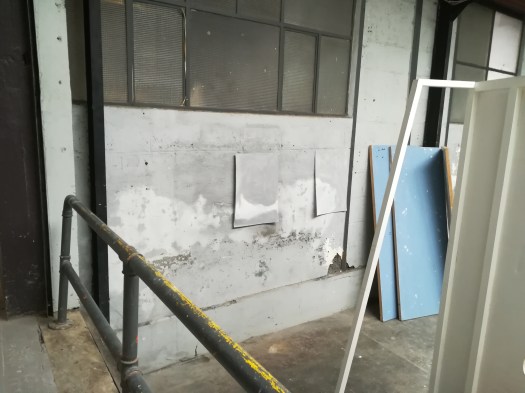
EN:
During 2015, war images seen in the media were already inhabiting my gaze.
When I met a refugee and viewed the images on their phone, they reactivated a visual memory shaped by earlier exposure.
Through screen printing, repetition, and camouflage, I sought to situate my practice within this tension between reception and distance.
By hand-reproducing existing wallpapers on tea paper, I began creating fake walls to integrate those images.
DE:
Seit 2015 hatten sich Kriegsbilder aus den Medien bereits in meinen Blick eingeschrieben.
Als ich einem Geflüchteten begegnete und die Bilder auf seinem Handy sah, reaktivierten sie eine visuelle Erinnerung, die schon zuvor geprägt worden war.
Durch Siebdruck, Wiederholung und Tarnung versuchte ich, meine Praxis in dieser Spannung zwischen Rezeption und Distanz zu verorten.
Indem ich vorhandene Tapetenmuster von Hand auf Teepapier übertrug, begann ich, falsche Wände zu bauen, um diese Bilder zu integrieren.
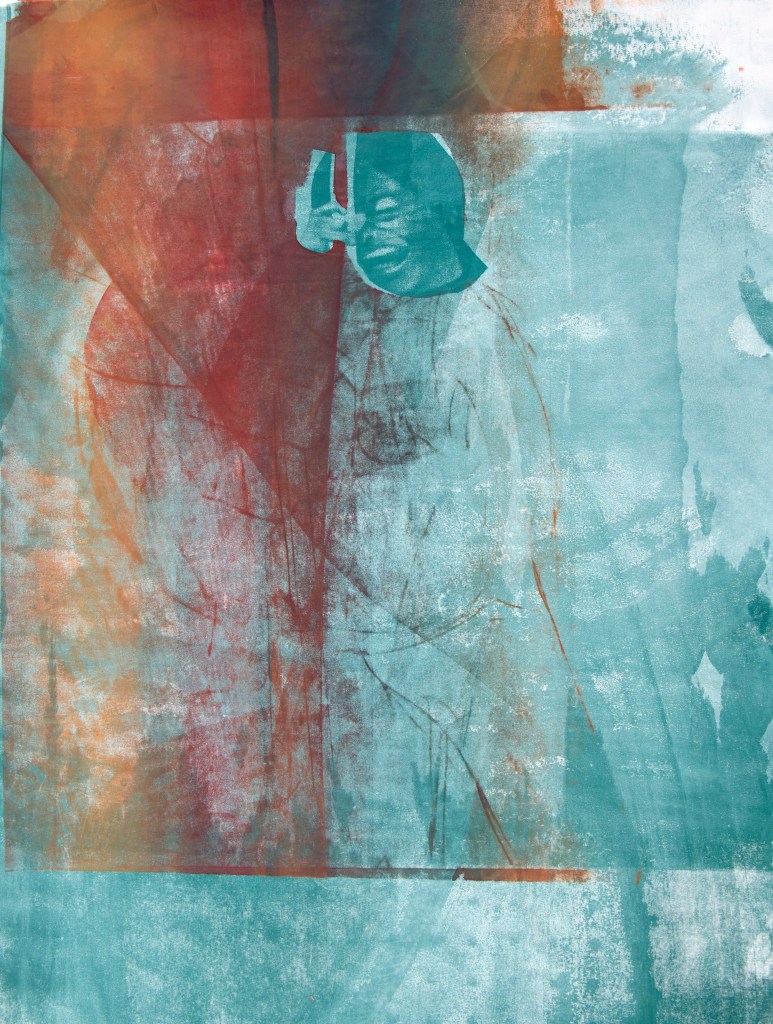
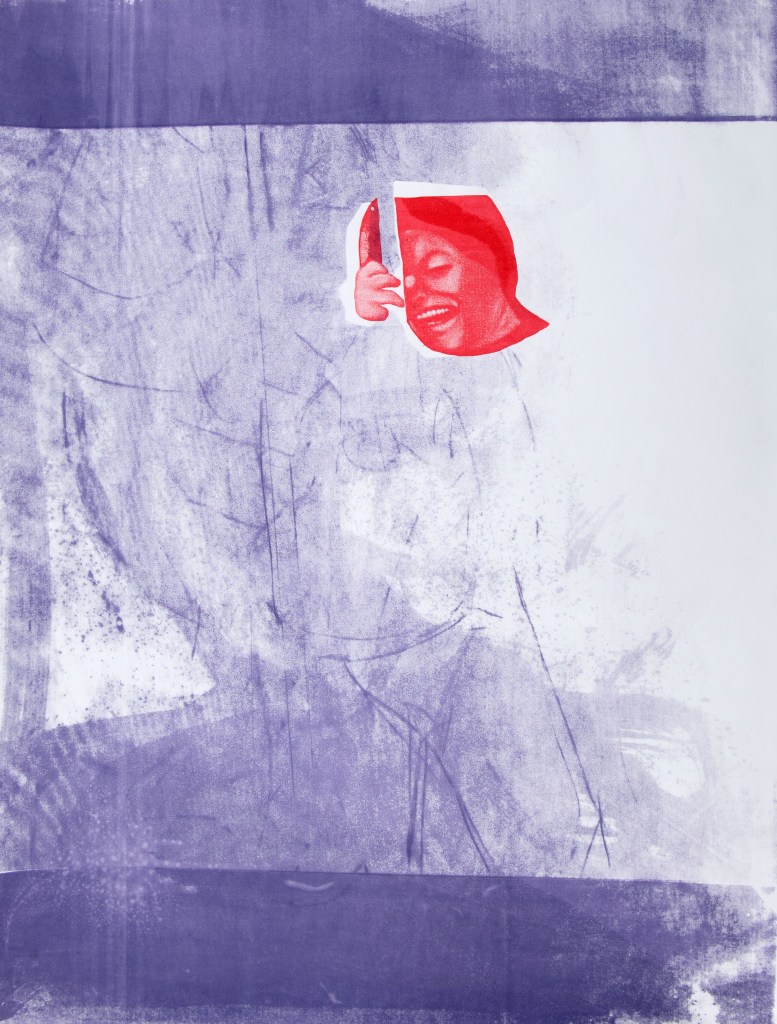
Covered images
Toulouse Art Institut – 2017
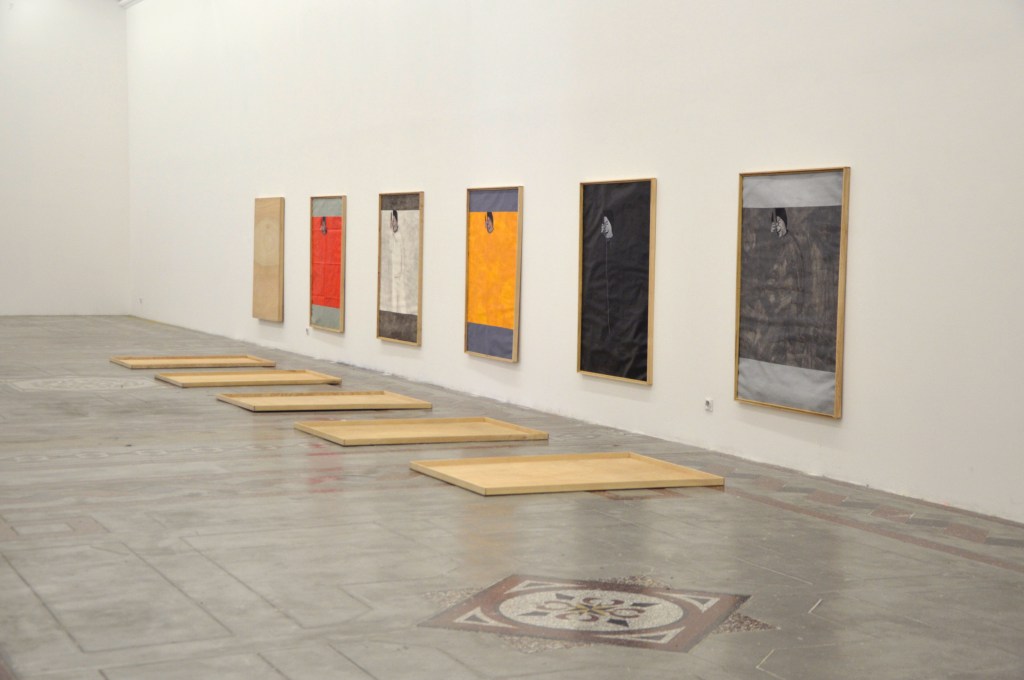
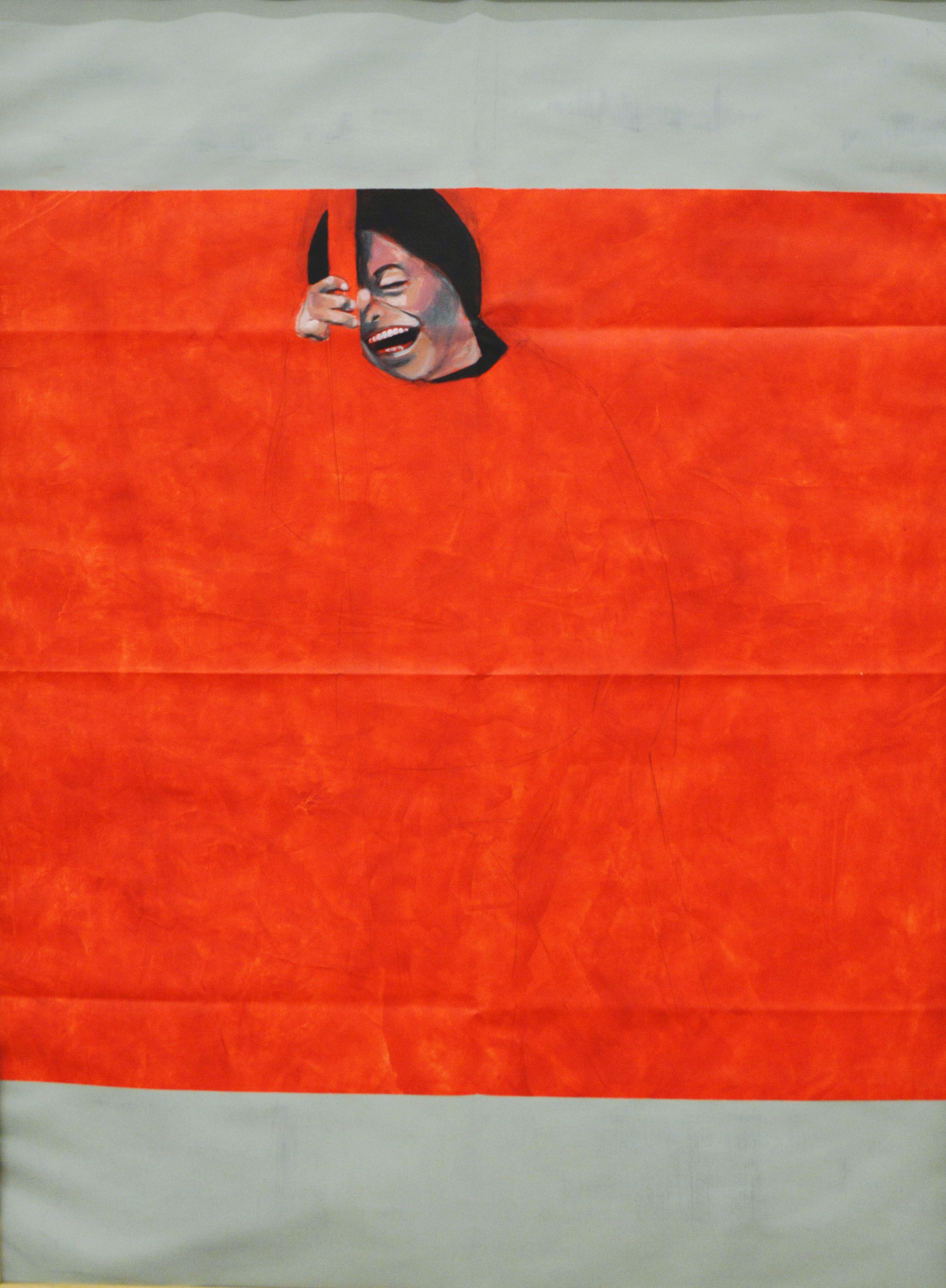
Something between us
The source image for this piece is an iPhone picture taken by a Kurd on the Iranian border. During this exchange with this refugee, other images passed before my eyes.
What remained of this human encounter and the images (witnesses to his journey) remained alive.
“less is more”
The manufacture of these wooden boxes and these paintings was built on a minimalist principle. Six boxes that can be hung on the wall containing the repetition of the same pictorial motif.
I adapted my techniques and pictorial systems to this project. The color palette of the backgrounds was limited to primary colors: red, yellow, blue as well as black and white.
The flesh of images
The large format papers were prepared with skin glue then covered with a layer of marble powder before applying the background color
The face pattern is isolated from the rest of the colored surface. This isolation is accentuated by the serial aspect of the work and by the use of oil paint. The work of the pictorial layers is worked by volute and pressure. So that the materiality of faces can increasingly take on the appearance of an epidermal reaction.
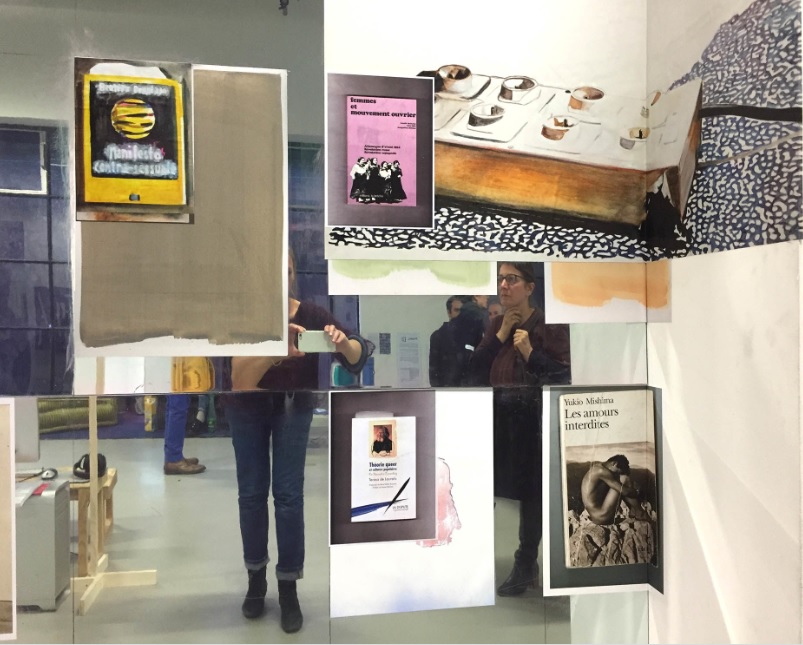
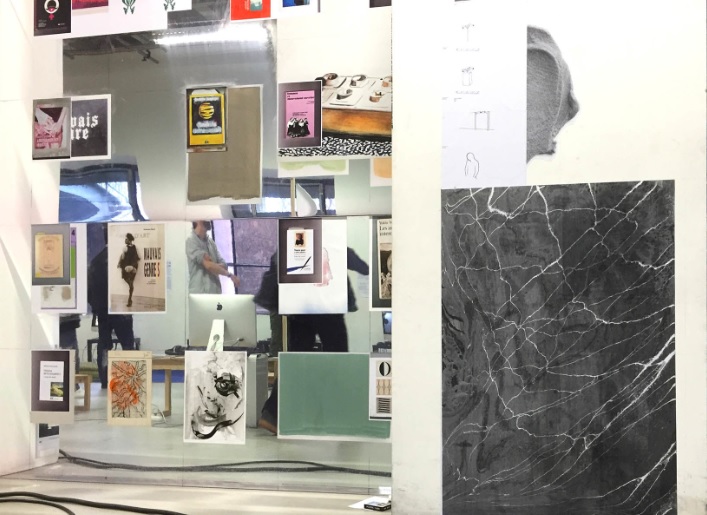
genre2030#Vision
Palais de Tokyo et Genre2030 – 2016
genre2030#Vision – Research in art and design, Palais de Tokyo, Paris, 2016,
billposting organized by drawing of numbers, curatorial concept with Hervé Senant,
participation of Joan Ayrton, Audrey Buchot, Charlotte Caldier, Emmanuelle Castellan, Katharina Schmidt, Thomas Demoulin, Ursula Döbereiner, Guillaume Durrieu, Charly Dubois-Escorsell, Kerstin Drechsel, Birgit Effinger, Soazig Gourvest, Friederike Feldman, Herny Kleine, Marthe Lallemand, Marion Lebbe, Francesca Monticone, Claire Saucet, Hervé Senant
Vers les images
Toulouse Art Institut 2016 – les Yper Yper Thessaloniki – 2014
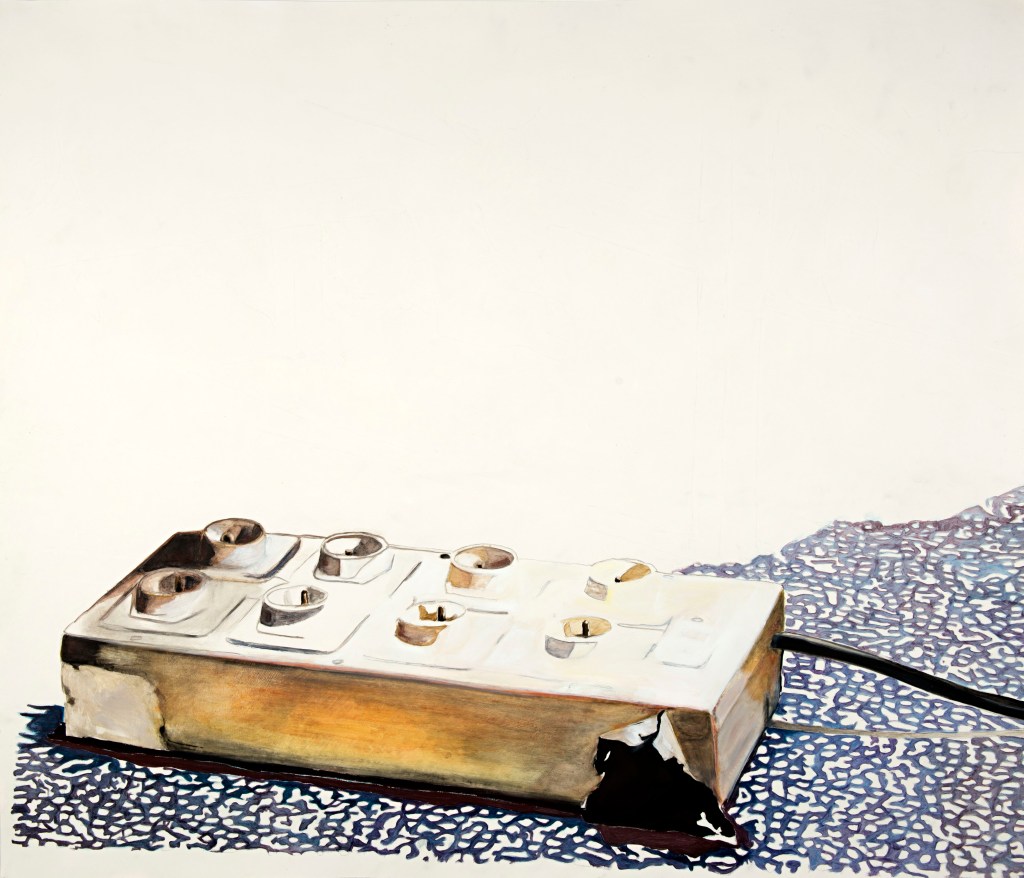
Burning things
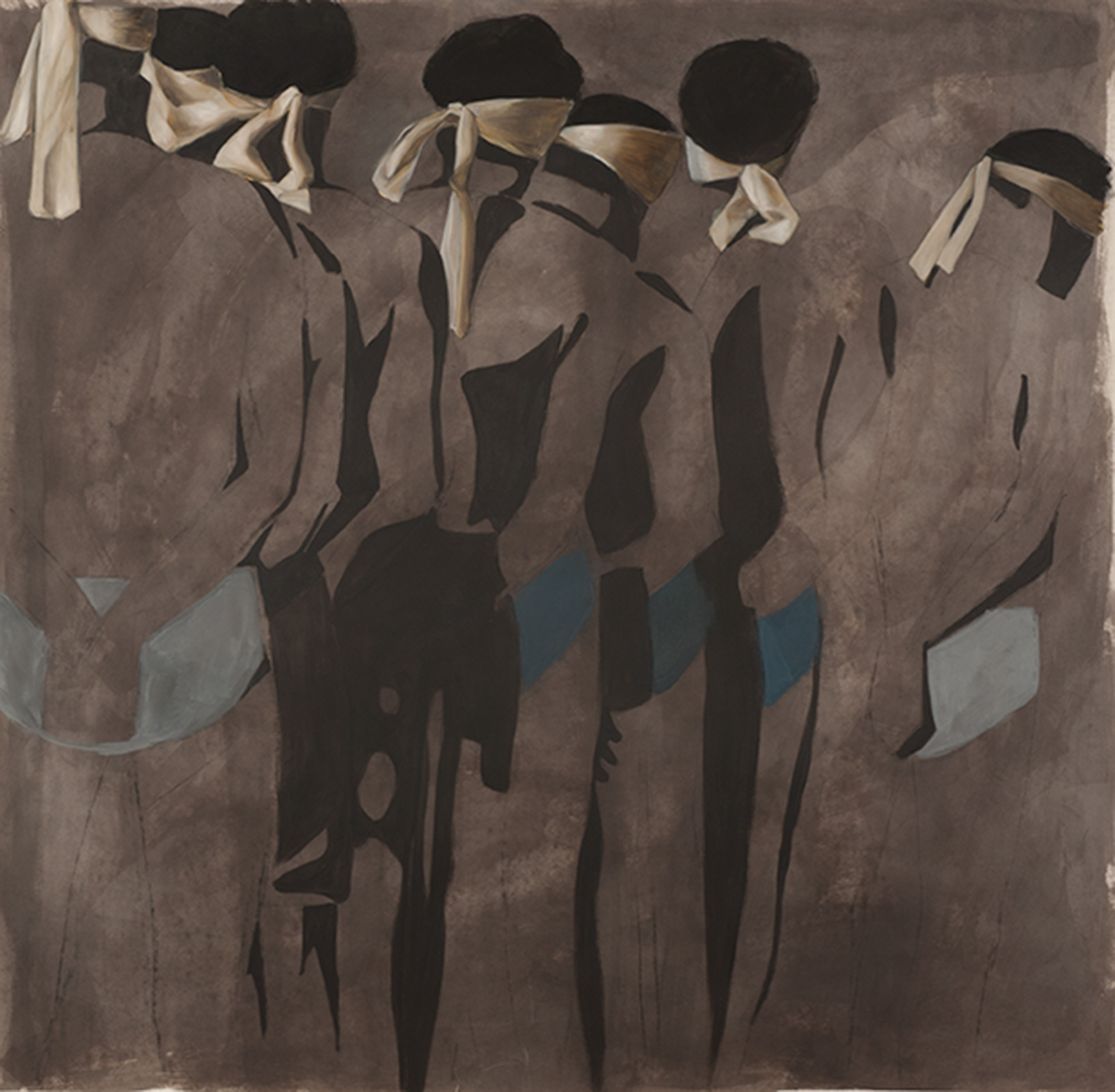
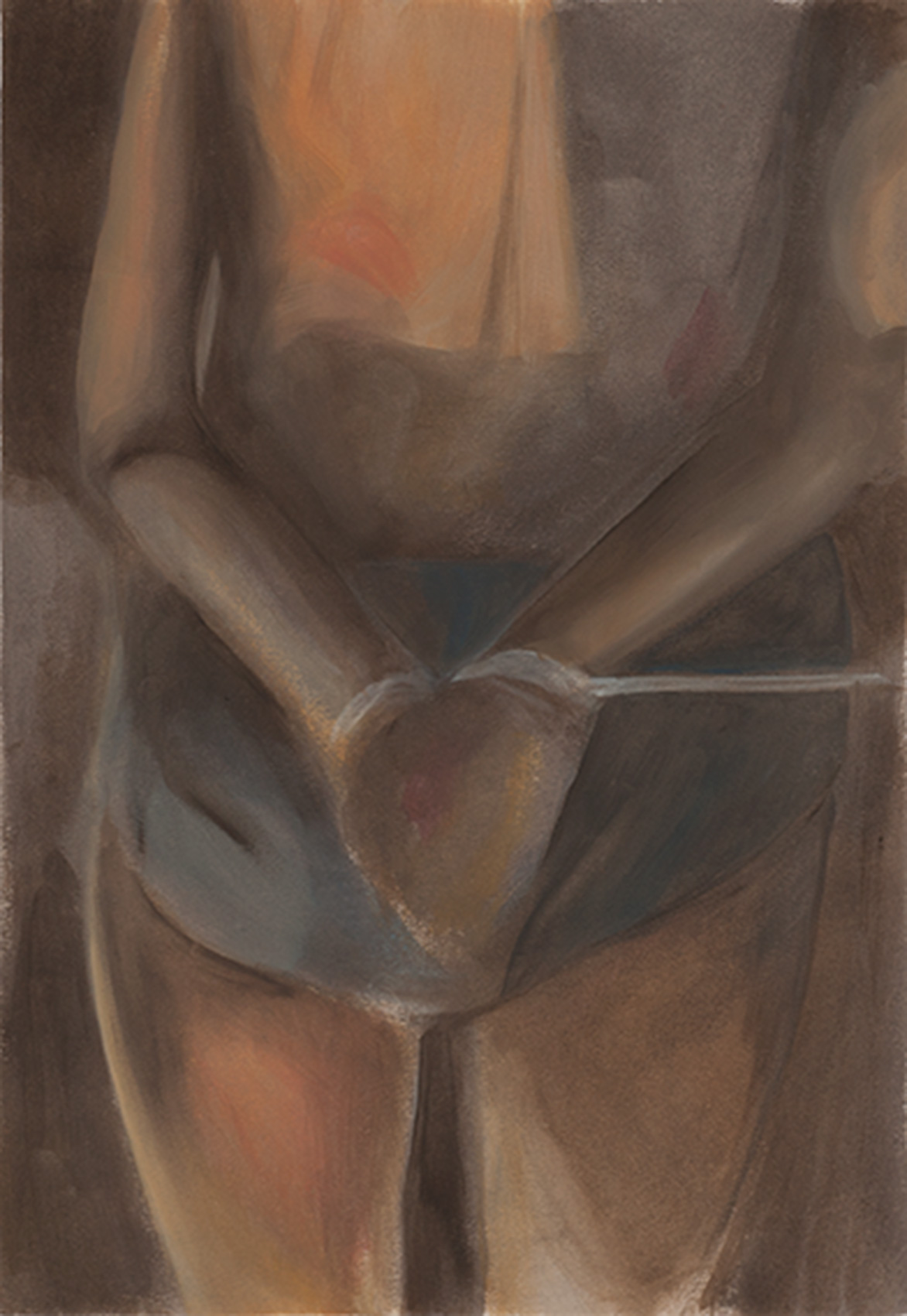
In 2015, images depicting the Syrian conflict and Islamic attacks became an increasingly pervasive presence in people’s daily lives. As an artist, the thousands of images circulating in the realms of art, information, and digital media raised questions for me about the nature of these images and how they could be incorporated into my artistic practice.
Step out
Leaving France and the School of Fine Arts in Toulouse for a few weeks offert me the possibility to isolate the omnipresence of these images of violence and to transcend them. This geographical and cultural trips opened me up another field of investigation in my questions about representation.
It is in Thessaloniki that I found the paper medium adequate for my work. The porosity of the surface with my pictorial treatment gave a dry, flammable and fragile look to my paintings.
These paintings are constructed first from the background and then later from the detail. This logic of construction allowed me to embrace a system of representation.
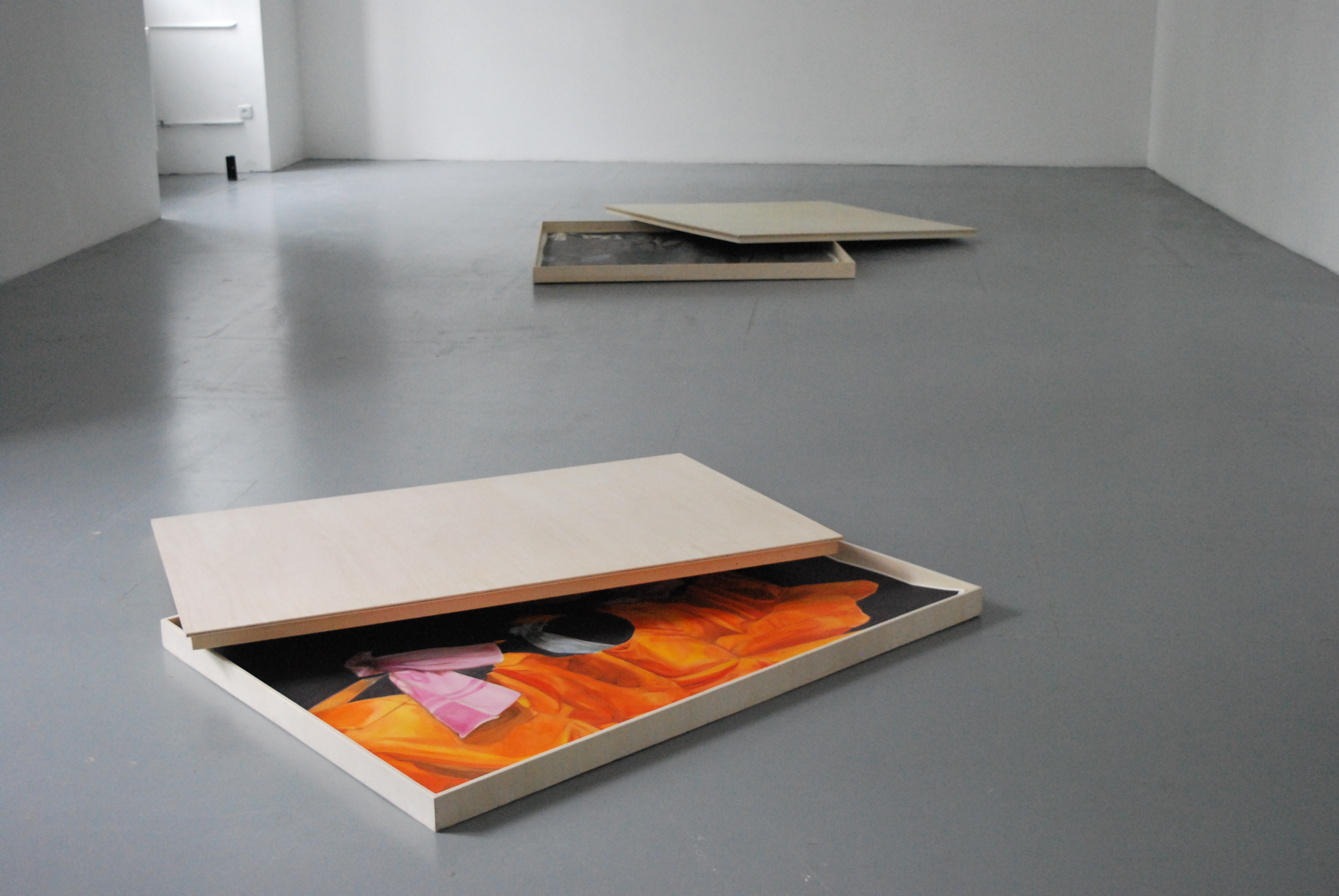
Wooden boxes
To account for this phenomenon of exclusion and inclusion, the visibility of my paintings had to claim the same principles of appearance as mentioned above: they had to come from Any where else and thus be discovered.
The use of wooden boxes allowed me to build this passage.
The circus
Toulouse Art Institut – 2016
Color as a system
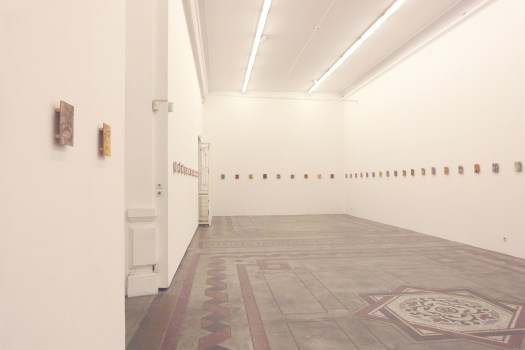
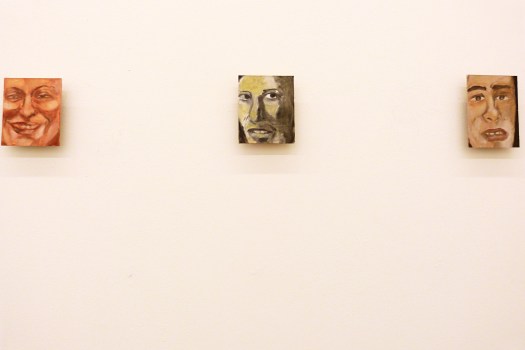
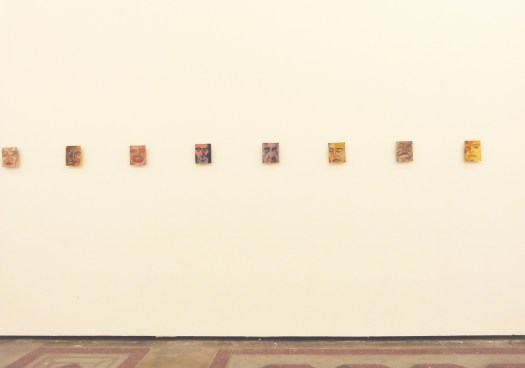
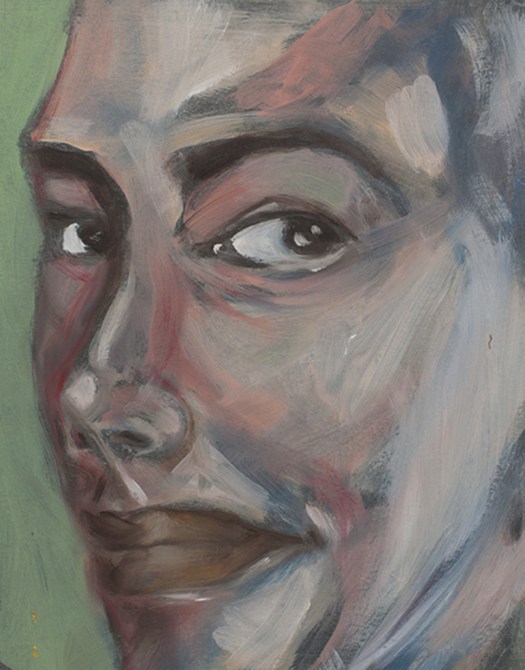
The circus is made up of around 150 “mask-portraits” in A5 format. I painted each portrait on a sheet of paper already covered and fixed with a colored preparation. The faces are framed very closely and painted on a human scale. As soon as I reached a hundred portraits I smoothed each of them on a Medium plate and over-advanced them with the help of a 3 cm deep wooden cleat.
The colored backgrounds are applied simultaneously and in no preferential order. This system of chromatic variation helped me build a sort of gradual line, like a color chart. Only instead of being thought horizontally I thought it spherically inspired by Philipp Otto Runge’s color sphere.
Look at the portrait
This variation of the same pictorial theme with the paradox of “the autonomy of the portrait”(1) suggests a space where Otherness is camouflaged by the visible. The radical layout of these portrait-masks, placed on a single line at the Palais des Arts de l’Isdat, allowed me to create a tension between the spectator and the work: the latter finds himself subjugated in relation to the portrait and at the same time excluded by their disobedient character: they/the portrait-masks advance outside the wall, try to get out of the frame, they look/see.
“Chaque portrait – de proche en proche, chaque tableau -s’ouvre de son fond à sa surface, va en avant de lui-même, sort au devant: ensemble à sa rencontre et au loin.”
Jean Luc Nancy “Le Regard du portrait” p76
© Marthe Lallemand – All rights reserved. All work on this homepage is protected by copyright.

